Generative engine optimization without the hype. How ChatGPT, Gemini, Perplexity and Google AI features choose sources, what the evidence supports, and what it does not.
Analyst estimates of the GEO market disagree by a factor of six on the forecast and nearly seven on current size, with growth rates from 13.6% to 50.5%. The skeptics are right that these numbers are unreliable. Here is why they diverge, and what evidence actually survives scrutiny.
Amazon's Rufus autonomously purchases when prices hit a target. Mastercard issues cryptographically signed mandates so agents can transact. Gartner projects 90% of B2B buying is agent-intermediated by 2028. I look at what changes when the thing reading your content cannot be persuaded.
Google says llms.txt neither helps nor harms. John Mueller compared it to the meta keywords tag. Adoption sits near 10% of domains and correlation studies find no citation effect. Here is the honest version, including the one use case where the file genuinely earns its place.
Every GEO playbook assumes AI engines can read your site. Cloudflare flipped the default to blocked on new domains and serves roughly a fifth of the web. I look at the access layer nobody optimizes, why it usually sits with infrastructure teams, and how to audit yours.
Adobe paid $1.9B for Semrush. HubSpot acquired a startup under a year old. Wix, Squarespace, Optimizely, and Cloudflare built natively. I mapped every move in the AI visibility category, the build-versus-buy math behind each one, and which giants acquire next based on who has the data gap.
Most teams treat LLM output as deterministic. We measured 180,000 responses across four AI engines for 18 months and found the opposite: visibility drops 30% overnight, and the engines agree on 11%.
Dozens of people cancelled Claude subscriptions over a feature with no effect on their rankings. What the watermark actually is, why the copyright argument circulating about it is backwards, and the constraint that was binding all along.
Google's official 2026 guidance says optimizing for AI search is still just SEO. Meanwhile Semrush's own data shows just 51% domain overlap between AI Mode and organic results.
Adobe does not make impulsive acquisitions, yet it put a ten-figure price on a discipline critics were still calling fake. Acquisition prices are the most honest signal in tech.
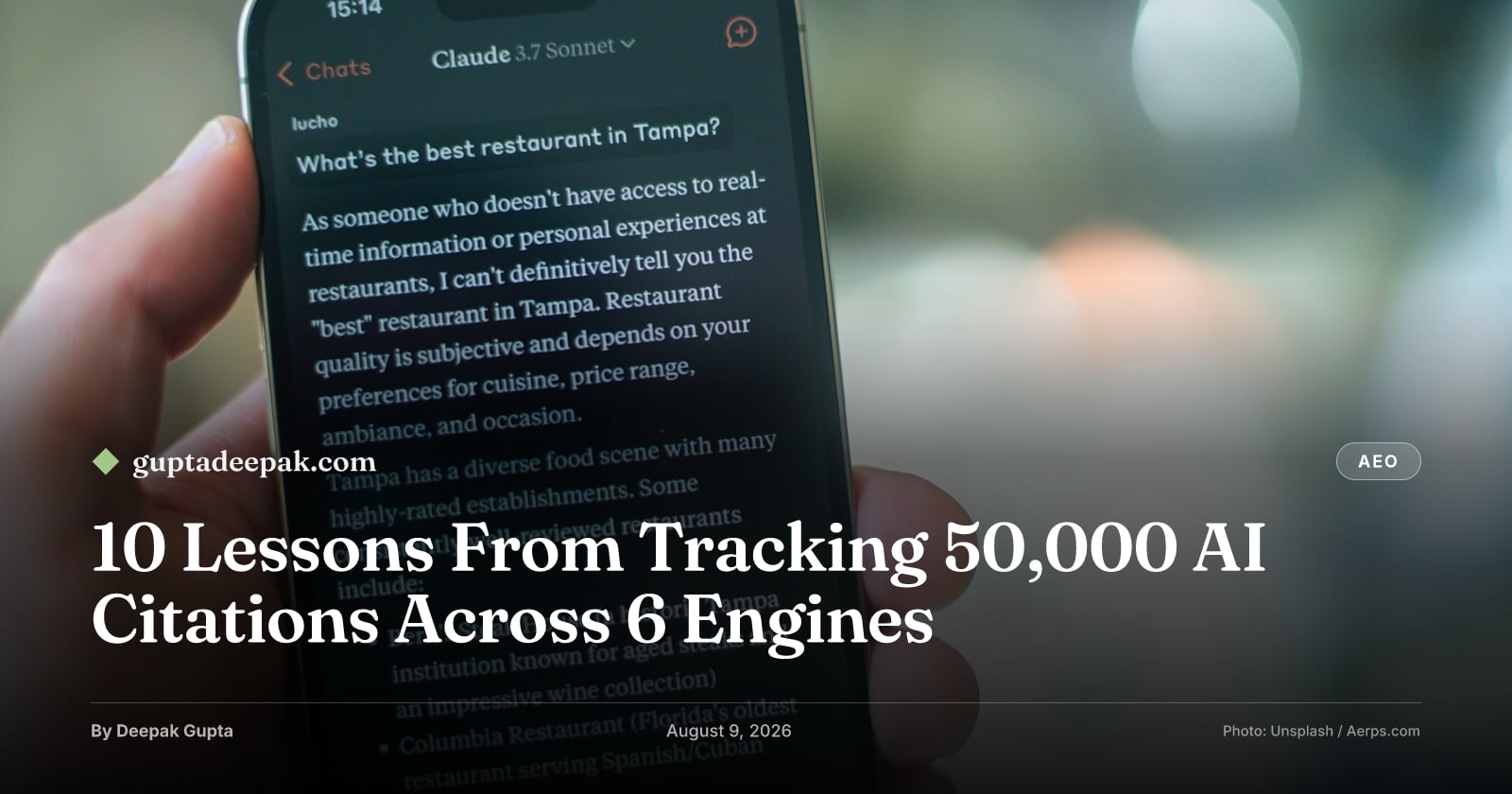
Over 90 days I tracked how six AI search engines cite sources across 50,000+ B2B software responses. The data broke several assumptions the GEO industry treats as settled, starting with the idea that AI visibility is one thing you can optimize for.
Black Hat and DEF CON pull millions in marketing spend to Las Vegas this week. AI engines that buyers ask afterward do not weigh booth size. They weigh whether your research is structured, specific, and citable.
Reddit, USA Today and Reuters are weighing whether to cut Google off. Most of the numbers from that story were corrected a day later. What the breaking crawl bargain means for B2B SaaS, and why blocking is a negotiating position rather than a plan.
LinkedIn says GEO is a grift. Corporate job boards say it is a salary band up to $171K at Stripe, SailPoint, AWS, and Citizens Bank. I break down what these companies actually hire for, and why this looks exactly like the cloud and email revolutions did fifteen years ago.
The structured data that gets cybersecurity vendors cited by AI: five JSON-LD schema types, plus how to reference CVEs, MITRE ATT&CK techniques, and NIST controls as extractable entities.
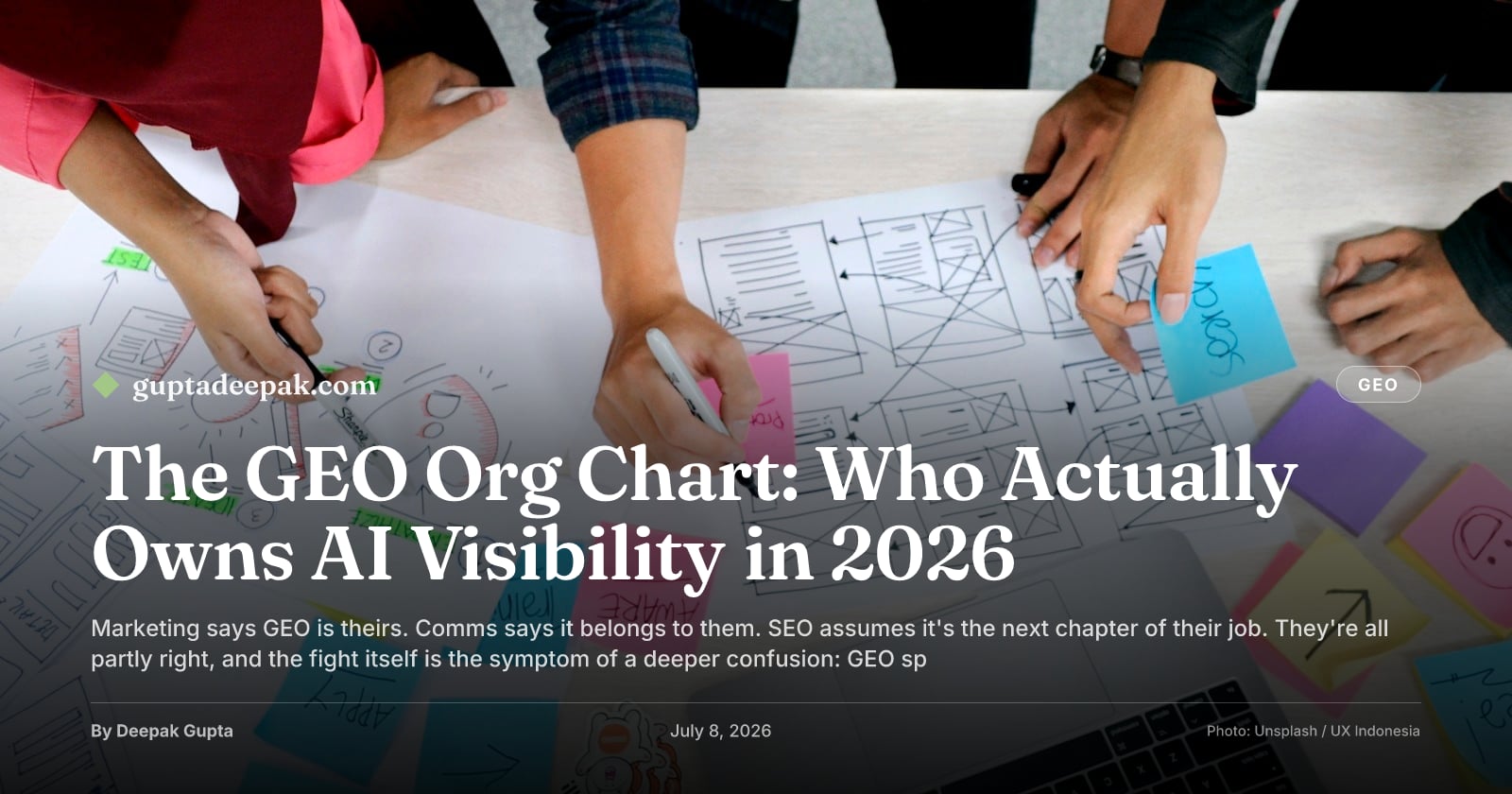
Marketing says GEO is theirs. Comms says it belongs to them. SEO assumes it's the next chapter of their job. They're all partly right, and the fight itself is the symptom of a deeper confusion: GEO spans layers no single team owns. Here is a model that resolves it.
For decades, Gartner and Forrester shaped enterprise buying. Now buyers ask ChatGPT and Perplexity before they ever open a Magic Quadrant. Here is how analyst influence is actually shifting, and what it means for how companies build credibility.
When a buyer asks an AI engine whether your product supports something, the answer often gets grounded in your documentation, not your marketing. Most companies treat docs as a cost center. In the AI search era, your documentation is one of the highest-value visibility assets you own.
When you name a feature something clever that no buyer would ever type into ChatGPT, you make your product harder to surface for the exact question it answers. Feature naming has always been positioning. Now it is discoverability, and product managers own it.
Traditional impressions on our properties fell 10-20% this year. AI search visibility rose 35%. That inversion is not a problem to fix; it is the new shape of B2B discovery, and the AI channel brings better-qualified buyers. Here is the data and what it means.
Eleven sub-portals plus the apex blog. Here is how they interlink for AI search, what each surface owns, the editorial architecture, and the practical stack I run them on.
Get new GEO & AI Search writing
New writing on identity, AI security, and building software, delivered when it ships. No tracking pixels, no funnels, unsubscribe with one click.