Opinionated essays and contrarian takes on identity, AI security, GEO, and building B2B SaaS. These are arguments with a point of view, the pieces meant to be debated, not neutral explainers. Newest first.
Jensen Huang declared AGI had arrived in a post that ended with "400K GPUs coming online next." That is not a scientific claim. It is a capital request with a headline attached. 2026 was remarkable. It was not the year general intelligence arrived.
India turns 79 today. Before any accelerator or investor, India installed the operating system I still build on: resourcefulness, jugaad, and the refusal to accept that something cannot be done. A reflection on going from back office to reference implementation.
Prompt engineering is overrated. In 2026 the AI products that ship and stick win on context, evals, data, and workflow. Here is the stack that actually matters.
On System Administrator Appreciation Day, appreciation for the people who hold the literal keys to the organization, and why identity work matters more, not less, in the AI era.
Reddit, USA Today and Reuters are weighing whether to cut Google off. Most of the numbers from that story were corrected a day later. What the breaking crawl bargain means for B2B SaaS, and why blocking is a negotiating position rather than a plan.
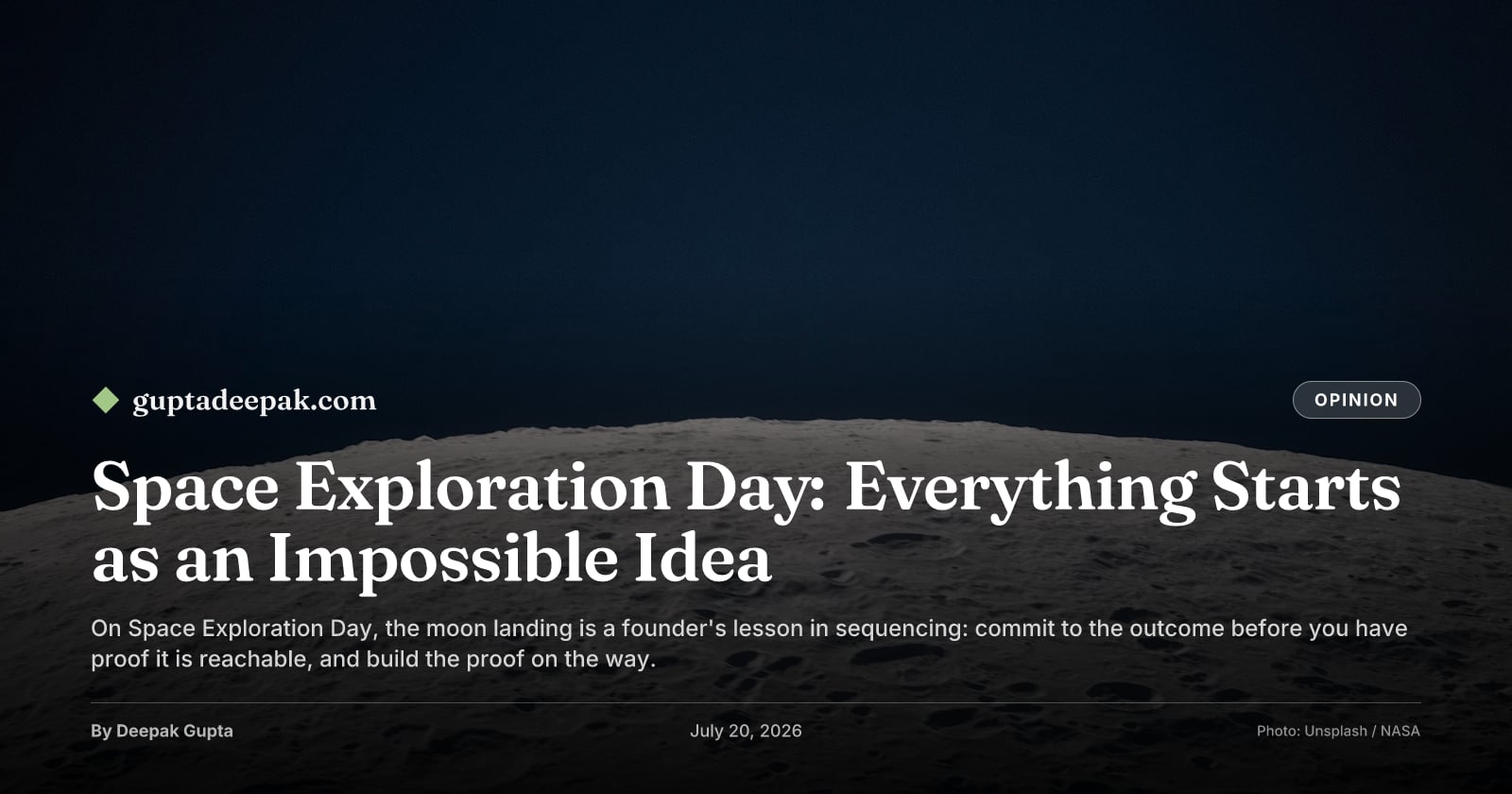
On Space Exploration Day, the moon landing is a founder's lesson in sequencing: commit to the outcome before you have proof it is reachable, and build the proof on the way.
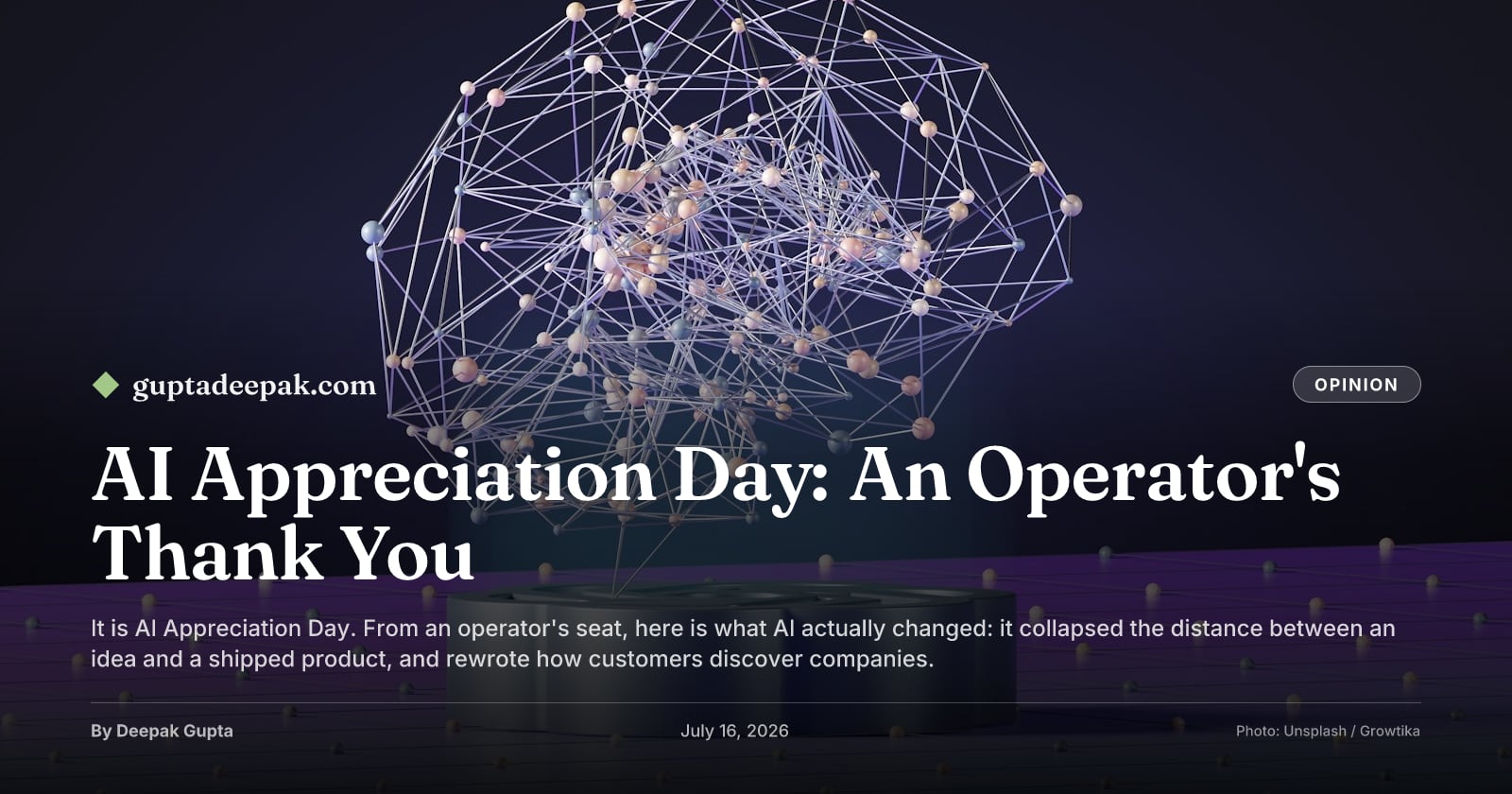
It is AI Appreciation Day. From an operator's seat, here is what AI actually changed: it collapsed the distance between an idea and a shipped product, and rewrote how customers discover companies.
On World Youth Skills Day, the advice that runs against the usual: stop future-proofing a single skill. The durable skill is learning a new one fast, under pressure.
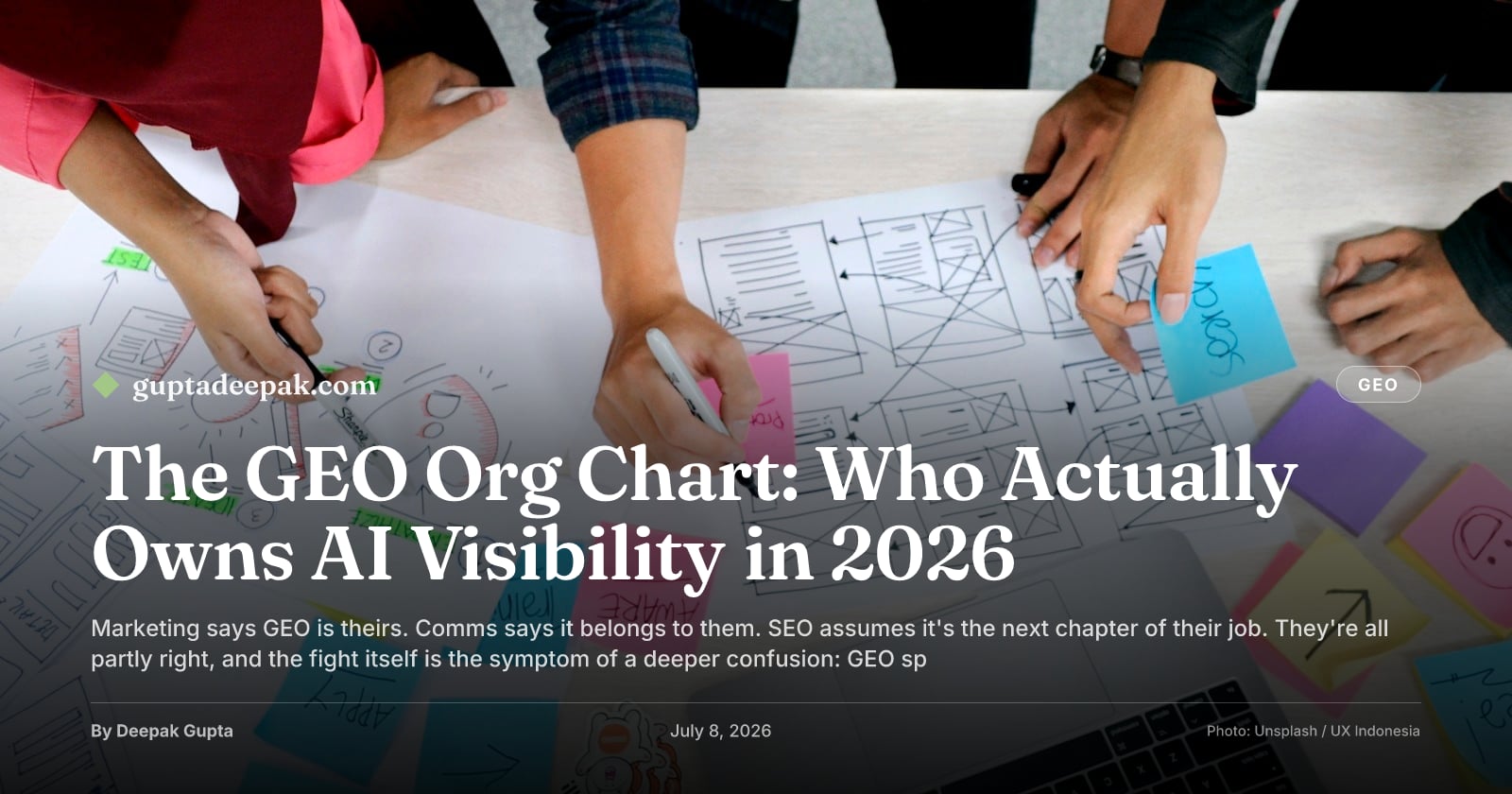
Marketing says GEO is theirs. Comms says it belongs to them. SEO assumes it's the next chapter of their job. They're all partly right, and the fight itself is the symptom of a deeper confusion: GEO spans layers no single team owns. Here is a model that resolves it.
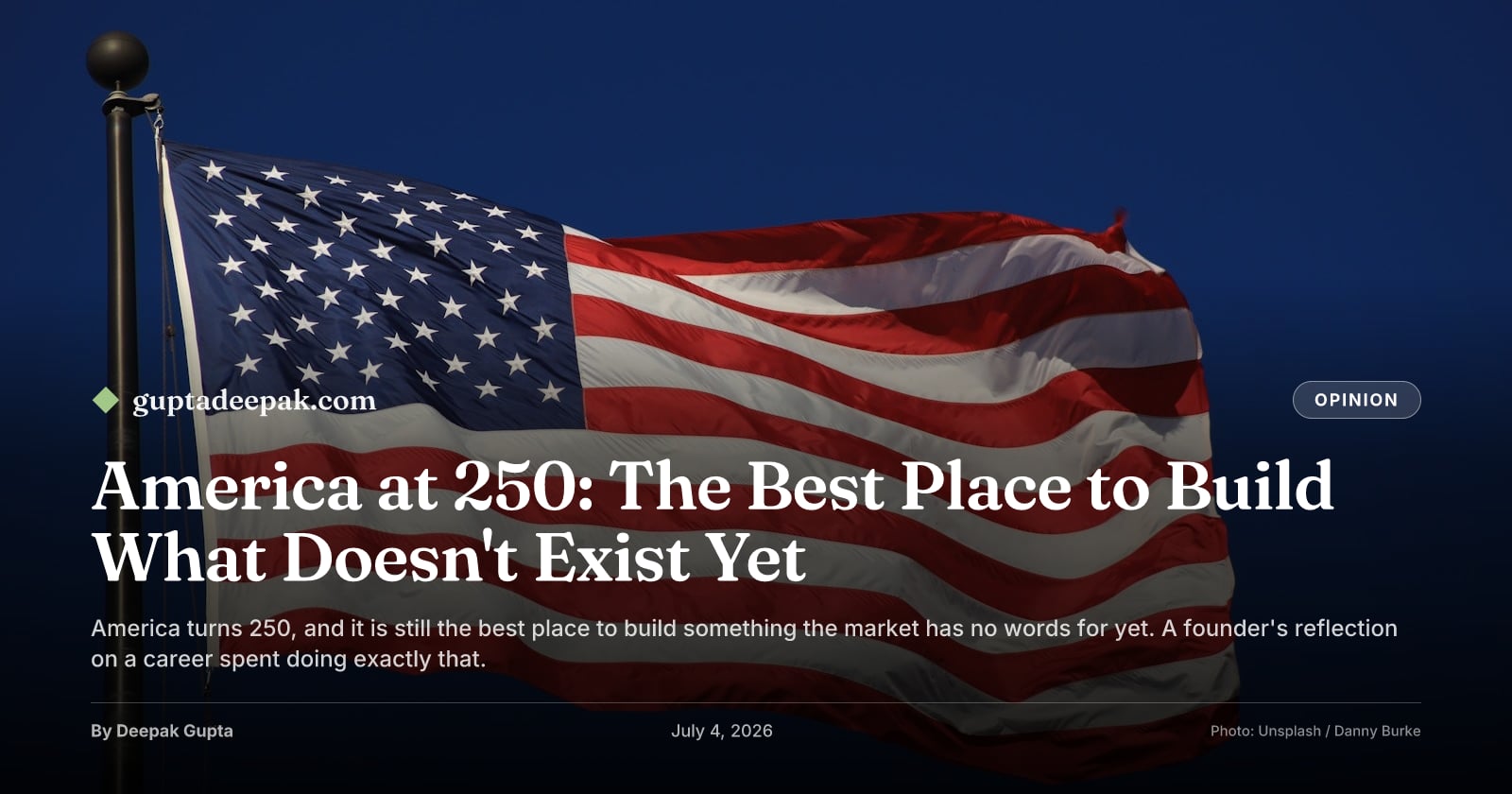
America turns 250, and it is still the best place to build something the market has no words for yet. A founder's reflection on a career spent doing exactly that.
When a buyer asks an AI engine whether your product supports something, the answer often gets grounded in your documentation, not your marketing. Most companies treat docs as a cost center. In the AI search era, your documentation is one of the highest-value visibility assets you own.
When you name a feature something clever that no buyer would ever type into ChatGPT, you make your product harder to surface for the exact question it answers. Feature naming has always been positioning. Now it is discoverability, and product managers own it.
Before the Bay Area, before GrackerAI, there was Canada. My first company started there, the one that grew to manage identities for over a billion users. A Canada Day reflection on where a founder story began and why a smaller stage is a gift.
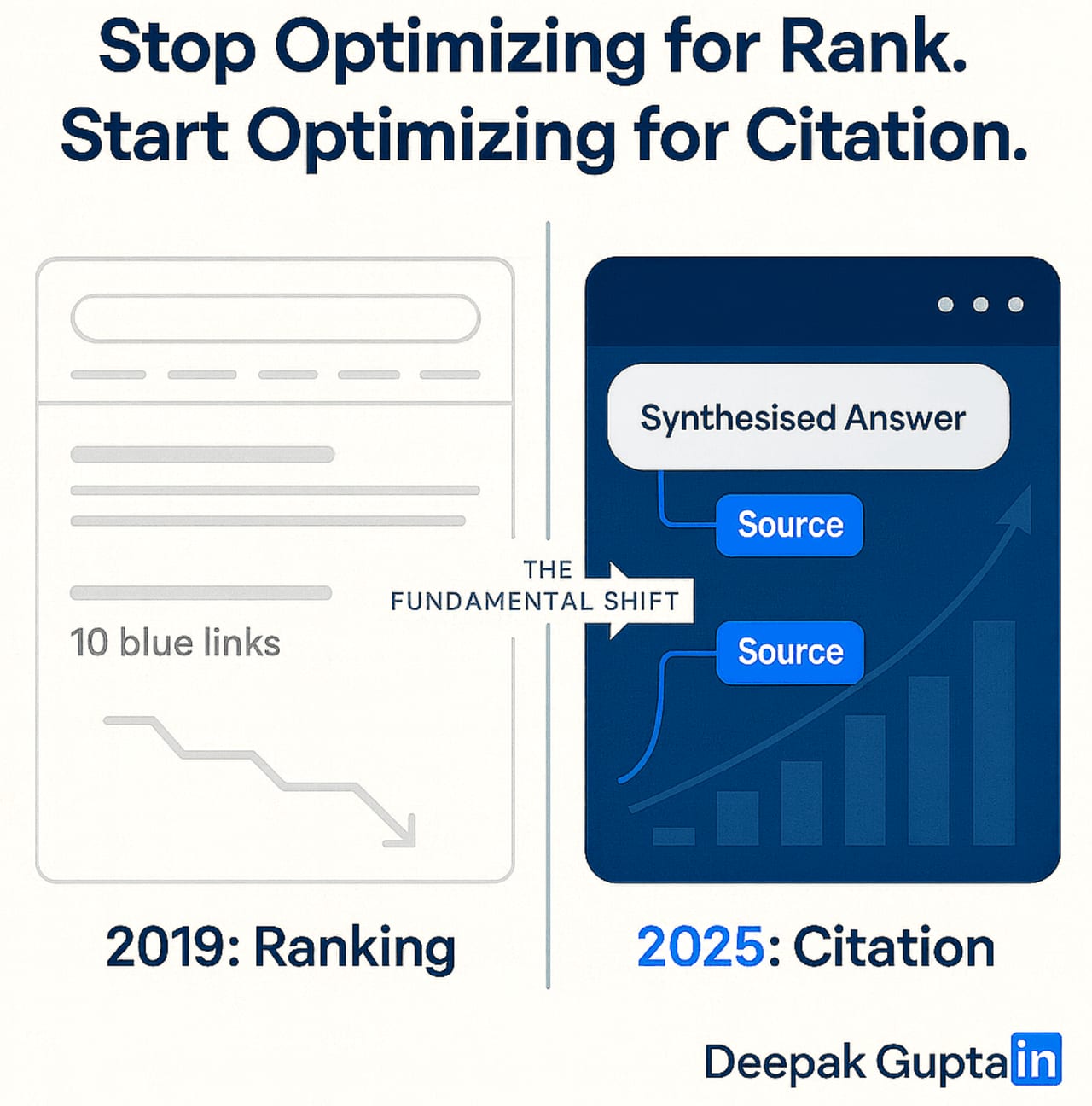
Traditional impressions on our properties fell 10-20% this year. AI search visibility rose 35%. That inversion is not a problem to fix; it is the new shape of B2B discovery, and the AI channel brings better-qualified buyers. Here is the data and what it means.
SEO became a craft because you could reverse-engineer one ranking function. GEO can't work that way: you're optimizing against many non-deterministic models with probabilistic citation behavior. That makes GEO experimental science, and it should be run like a product team runs experiments.
Crawl budget is no longer a technical SEO footnote. Google's AI surfaces draw from the same Search index as the blue links, so whether you appear in an AI answer reduces to whether Google crawled, indexed, and kept your pages fresh.
Apple Podcasts and Spotify recommend the same 10 shows to everyone. The "best tech podcasts" lists are SEO chaff. Here is why discovery broke and the editorial-curation alternative.
The entire GEO industry treats AI visibility as a marketing problem: track citations, optimize content, report share of voice. That framing is why most GEO programs plateau. The deeper truth is that GEO is a product discipline, and the teams winning at it have figured that out.
MQL-driven gated content is still the B2B SaaS orthodoxy. I un-gated every e-book in 2025. Here are the actual numbers on pipeline, AI citation share, and brand authority 12 months later.
The "free Gartner alternative" framing hides a structural conflict: every "free" platform monetises by selling to the vendors it ranks. Here is why that breaks B2B buying, and what works instead.
Building software just got 10x easier with AI. That breaks most of the 2015 SaaS playbook. Here are the new hard truths every SaaS founder needs to see clearly.
SEO became a horizontal layer because its substrate was uniform: one ranking algorithm, one signal set, one results format. GEO can't collapse that way. Here is the architectural reason.
The cybersecurity industry's reliance on gated PDFs and MQL-driven content is actively destroying future pipeline by making the best content invisible to
We cancelled Auth0 over a year ago. Not because it stopped working, but because scaling to 350,000 monthly active users made the pricing model untenable.
Think incidents happen because of bad code? After handling countless outages, I found the real culprits are usually people, process, communication, and culture.
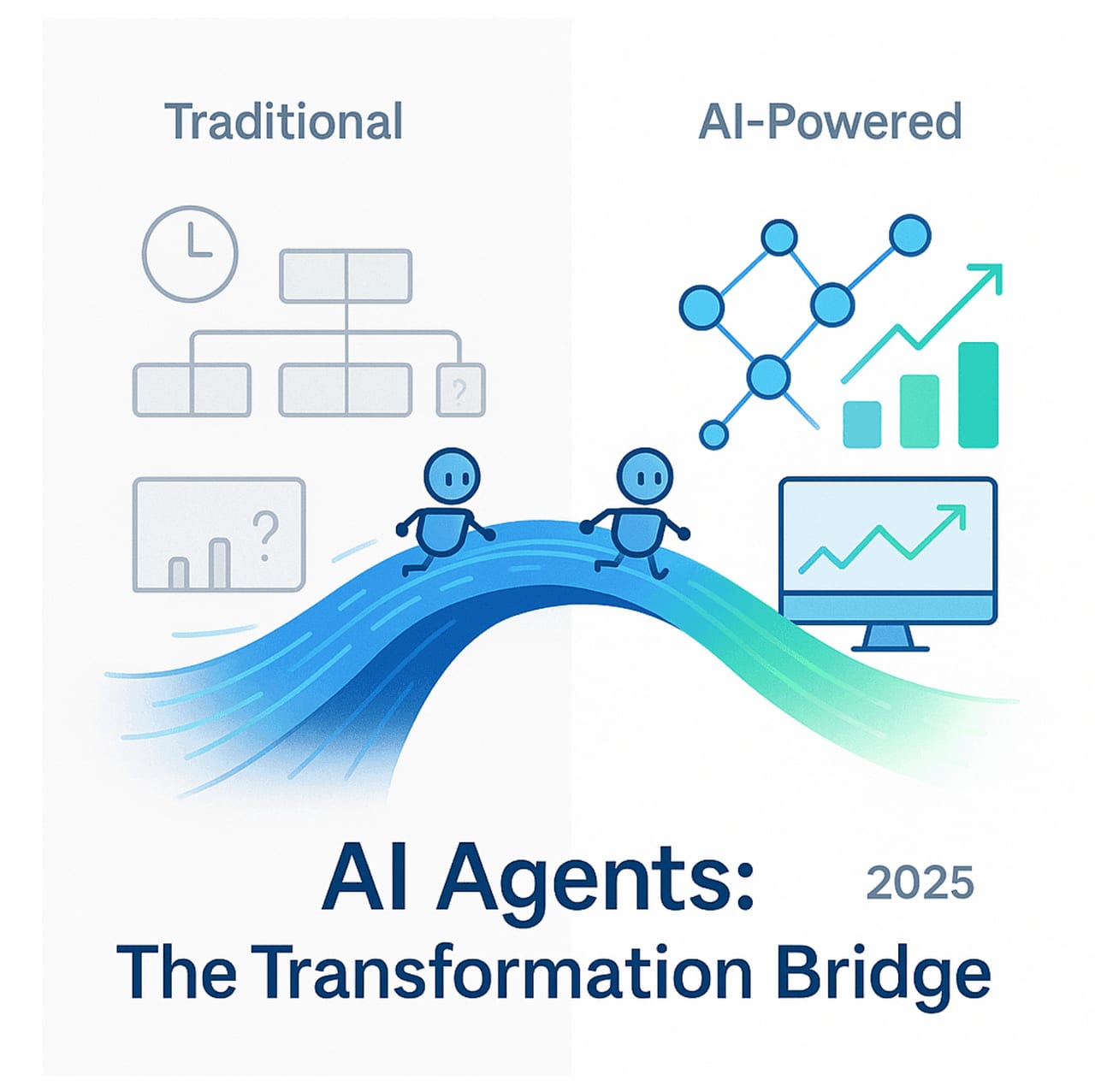
🤖 AI agents reached $5.4B market value in 2024, growing 45.8% annually. While traditional marketing teams plan quarterly campaigns, AI agents optimize in
OpenAI just released GPT OSS - their first open-source AI models since 2019. These aren't just free downloads; they're transparent, powerful systems that
What does it mean if everyone’s an identity driven company? Before answering that question, let’s define what it means to be an identity-driven company.