
What AI Actually Changes About the Sales to Support Handoff
The handoff was never a document problem. What AI actually changes about moving a customer from sales to support, and why the same work makes AI engines understand your product.
There is a moment in every B2B deal where it stops being a deal and becomes somebody else's problem. The contract is signed, the account executive moves to the next opportunity, and a customer who was sold a future arrives at a support desk that only knows the present.
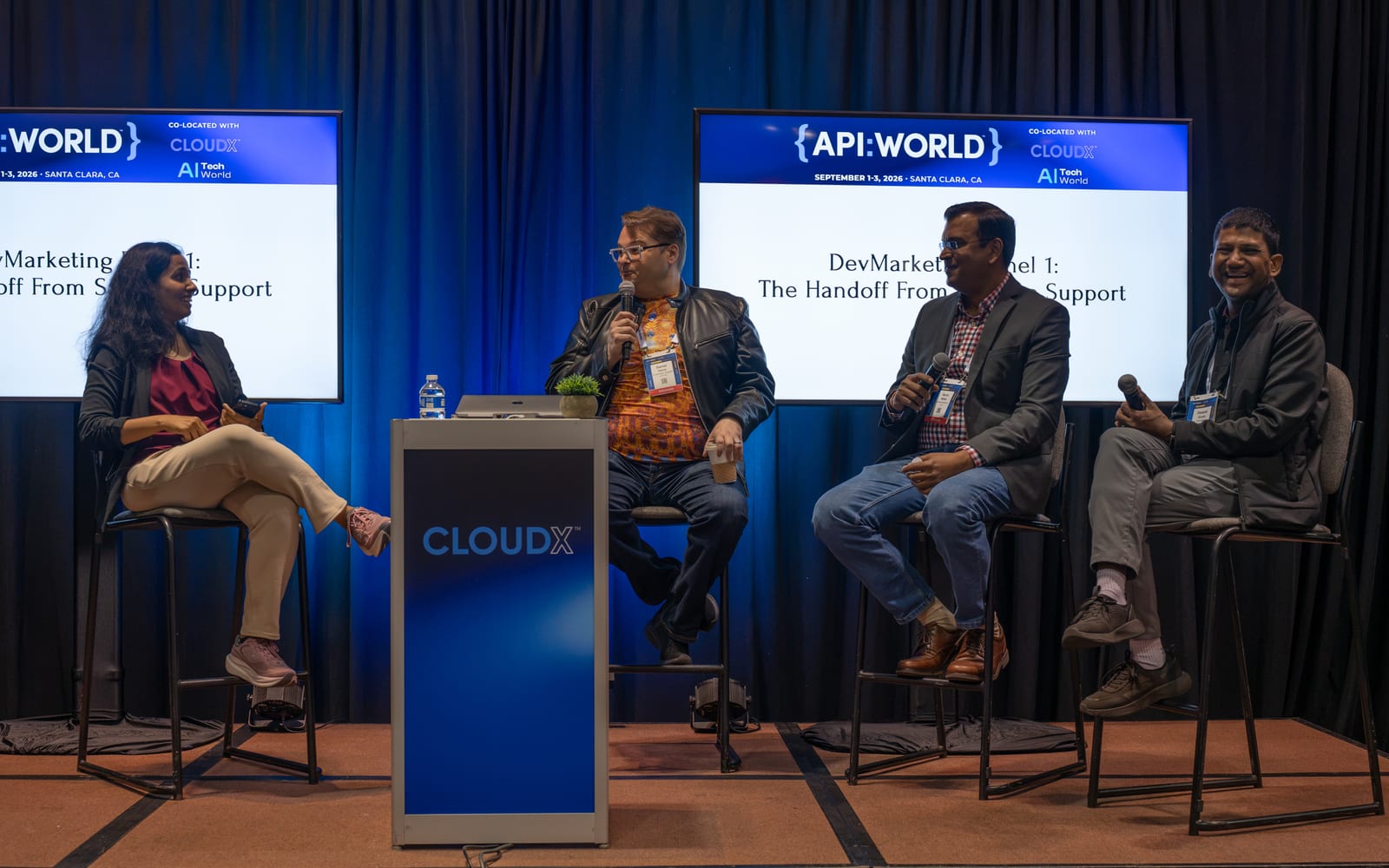
I have been on both ends of that moment. At LoginRadius I built the engineering, customer solutions, and customer success teams from scratch while we scaled past a billion user identities. I have personally watched a promise made in a sales call land on an on-call engineer at the worst possible time. Last week I sat on a panel about exactly this at API World 2026, on the CloudX Expo Innovation Stage.
The panel asked three questions. How do you handle the handoff when support realizes the customer's expectations do not match technical reality? How are teams using AI to automate knowledge transfer from the account executive to support and success? And at what exact moment is a handoff actually complete?
This is the longer version of what I argued, plus the part I only had thirty seconds for on stage: the same work that fixes the internal handoff is the work that makes AI engines understand your product.
The short answer
AI does not fix the handoff by writing a better summary. It fixes it by reading material no human reads in full: every call recording, discovery note, email thread, and prior support ticket on the account. From that it extracts the three things a handoff template never captures. The specific commitments made, the objections parked rather than answered, and the gap between what the customer believes the product does and what it does today.
The second-order effect is the one most teams miss. That same corpus, made specific and consistent, is what ChatGPT, Perplexity, Google AI Overviews, and Copilot read when a buyer asks them what to use. Fixing the handoff and improving AI visibility turn out to be the same project.
The handoff was never a document problem
Every company I have worked with already has a handoff template. Fields for the use case, the stakeholders, the technical requirements, the success criteria. The template is not the problem. The problem is that the template captures the contract while the promise lives somewhere else. In a recorded call nobody re-listens to. In an email thread the success manager was never on. In the account executive's memory of a reassurance given at the exact moment a deal was wobbling.
The gap between what a customer believes the product does and what it does today is the single most valuable piece of information in a handoff, and it is almost never written down. It does not get written down because writing it down feels like admitting something. So it surfaces later, as a first-week support ticket that reads like a bug report and is actually a sales conversation.
What AI is genuinely good at here
This is the first part of go-to-market where I think the AI story is not overstated.
Call recordings, discovery notes, email threads, proposal documents, and past support tickets are one corpus. A model can read all of it. No human account executive writing a handoff document at 6pm on a Friday reads all of it. That asymmetry is the whole opportunity, and it is not about saving somebody twenty minutes of typing.
The value is not the summary. Summarization is solved and largely useless on its own, because a summary nobody reads before the kickoff call is the same failure as no summary at all. The value is extraction, and specifically three extractions:
- Commitments. Every specific thing that was promised, with the timestamp and the call it was promised on. Not "customer is interested in SSO" but "we said SAML provisioning would be available in Q1".
- Unresolved objections. The concerns that were parked rather than answered. These are the ones that come back, and they come back to the team that was not in the room.
- The expectation gap. What the buyer believes is true that is not true yet. Naming this in week one turns a future escalation into a roadmap conversation, which is a completely different meeting.
Those three outputs go into the success plan as structured fields, not into a document as prose. A handoff artifact that gets longer is not an improvement. A handoff artifact that gets more specific is.
Consistent messaging is the actual deliverable
Here is the failure mode that no process fixes. The pitch deck describes the product one way. The website describes it another way. The documentation, written by engineers, describes what it actually does. The support macros, written under pressure, describe what it does when it breaks.
When those four surfaces disagree, the handoff breaks no matter how good the template is, because sales, success, and support are each accurately reporting a different version of the product. The customer hears three answers and concludes that nobody knows.
Feeding every surface from one source of truth is unglamorous work and it is the highest-leverage thing most B2B companies could do this quarter. Not a brand voice document. One description of what the product does, who it is for, what it costs, and what it does not do yet. The deck, the site, the docs, and the macros all inherit from it.
The conversation becomes product-led, not because you decided it would
Once support tickets and sales calls are readable together, something changes in the enterprise conversation that I did not anticipate the first time I saw it.
The demo script stops being the center of gravity. What replaces it is evidence: what customers in this segment actually do with the product in month one, where they consistently get stuck, which capability closed which deal, and which promised capability generated the most tickets. That is a more honest sales conversation and it is also a more effective one, because enterprise buyers have heard every demo script and none of them have heard your ticket data.
It also changes what the product team hears. Support tickets aggregated across the sales cycle are a roadmap input with revenue attached, which is the only kind of roadmap input that reliably wins arguments. Buyers rarely make this decision alone either, which is why the committee dynamics in how security buyers actually buy matter as much as the demo.
The part I had thirty seconds for: this is also how AI engines learn your product
Everything above is an internal argument. Here is the external one, and it is why I care about this problem more now than I did at LoginRadius.
The material that explains your product, its value, and the pain it removes is exactly what ChatGPT, Perplexity, Google AI Overviews, and Microsoft Copilot read when a buyer asks them what to use. There is no separate marketing corpus and knowledge corpus. There is one corpus, and the models read whichever parts of it are public.
So a clean internal knowledge base is a public discovery asset, whether you intended it that way or not. The specificity that makes a handoff useful, naming the exact use case, the exact constraint, the exact integration, the exact thing this does not do, is the same specificity that makes a model able to say what you are for. Vague positioning fails in both directions at once: the success manager cannot tell what was sold, and the model cannot tell what you do.
Two more things follow from that.
AI agents are becoming the buyer. An agent doing product discovery on behalf of a real buyer needs machine-readable answers to what this does, who it is for, what it integrates with, and what it costs. Not a gated PDF and a demo request. If the answer to a buying question is behind a form, the agent moves on and your competitor gets summarized instead. I wrote about that specific failure in why gated whitepapers are killing your AI visibility.
AI agents are becoming the first line of support. The same corpus that answers a pre-sale question answers a post-sale one. Companies that structure it once serve both, and companies that keep the two in separate systems maintain two half-correct answers to the same question forever.
The after-sales half is where this compounds
Resolved tickets, onboarding sessions, and success plays are the highest-signal product documentation a company owns. Real questions from real customers, with verified answers, in the customer's own vocabulary rather than the marketing team's.
Almost none of it ever leaves the helpdesk.
Publishing the safe subset, with customer specifics stripped, does three things at once: it deflects tickets, it shortens onboarding for the next customer, and it gives the AI engines the exact kind of specific, problem-shaped content they cite. That last one is not a side effect worth mentioning in passing. In our own citation tracking across four engines, only about 17% of citations point at a brand's own domain, so the handful of pages you do own have to be the ones that answer a real question precisely. I covered how we measure that in the citation drift research from the second talk that day.

So when is the handoff actually done?
Not at the introduction email. Not at the kickoff call. Both of those are internal milestones wearing a customer-facing costume.
The handoff is complete when the customer reaches their first real outcome, the thing they bought the product to do, and the team that gets them there knows exactly what was promised on the way in. Everything before that is scheduling.
Two operational changes get you most of the way there, and neither requires new software:
- Give support and success read access to late-stage deals before they close. It costs nothing and it catches the promises that would otherwise arrive as a first-week ticket.
- Make the expectation gap a required field. Not the win, the gap. A handoff record that cannot name one thing the customer expects that does not exist yet is a record nobody thought hard about.
None of this removes the human judgment call. AI can surface that a promise was made and flag that it does not match the roadmap. Deciding what to tell the customer, and when, is still a person's job. Doing it in week one instead of month three is the entire difference between a renewal and a churn post-mortem.
Frequently Asked Questions
What is the sales to support handoff?
It is the transfer of a closed customer from the sales team to the support and customer success teams, including the account context, the technical requirements, and the commitments made during the sales cycle. It fails most often because the commitments live in calls and emails rather than in the handoff record.
How does AI improve the sales to support handoff?
A model can read the entire account corpus: call recordings, discovery notes, email threads, and prior support tickets. From that it extracts three things a template rarely captures. The specific commitments made, the objections that were parked rather than resolved, and the gap between what the customer believes the product does and what it does today.
Is summarizing sales calls with AI enough?
No. Summarization produces a longer artifact, and a summary nobody reads before the kickoff call is the same failure as no summary. The useful output is structured extraction into the success plan: commitments, unresolved objections, and the expectation gap, each as a field rather than a paragraph.
When is a customer handoff complete?
When the customer reaches their first real outcome and the team supporting them knows what was promised during the sale. The introduction email and the kickoff call are internal milestones, not customer ones.
What does the sales to support handoff have to do with AI search visibility?
The material that explains your product, its value, and the problems it solves is the same material AI engines read when a buyer asks them what to use. A specific, consistent internal knowledge base is also a public discovery asset, and vague positioning fails internally and externally for the same reason.
Should companies publish their support content?
The safe subset, yes, with customer specifics removed. Resolved tickets and onboarding material are the highest-signal product documentation most companies own, and publishing them deflects tickets, shortens onboarding, and gives AI engines specific problem-shaped content to cite.
This post is the long-form version of a panel on the CloudX Expo Innovation Stage at API World 2026 on 3 September. The session page has the panel, the questions as asked, and the short-form takeaways.
More like this
All Founders & Growth- GEO & AI SearchYour Cold Email Inbox Is the Cheapest Positioning Audit You Will Ever RunEight out of ten cold emails now describe my company correctly. Eighteen months ago it was three. Nobody ran a rebrand.
- AI Security & AgentsHow AI is Changing the Game for SaaS Sales TeamsAI is transforming how SaaS companies find and convert customers. While traditional companies struggle with 32% conversion rates,…
- Founders & GrowthGrowth Channels Ranked: Where Should Your GTM Team Actually Focus?Referral and inbound carry the lowest CAC because the buyer arrives already educated. But the cheapest channel is not automatically the…
Get new Founders & Growth writing
Enjoyed this? Subscribe and tell us what you read most. Founders & Growth is already ticked for you. No tracking pixels, unsubscribe with one click.