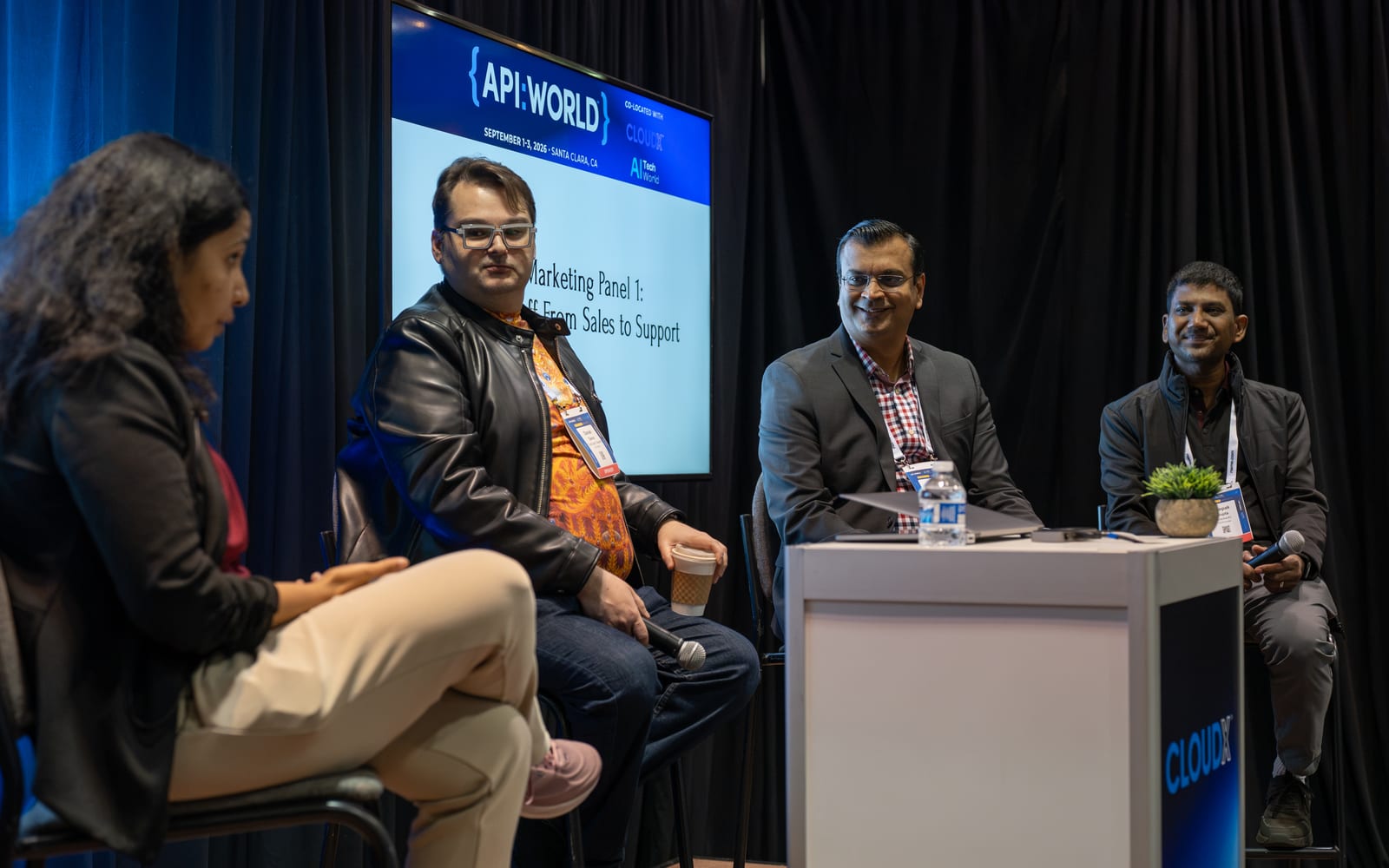
Panel: The Handoff From Sales to Support
At API World 2026, CloudX Expo, AI TechWorld, part of API World 2026
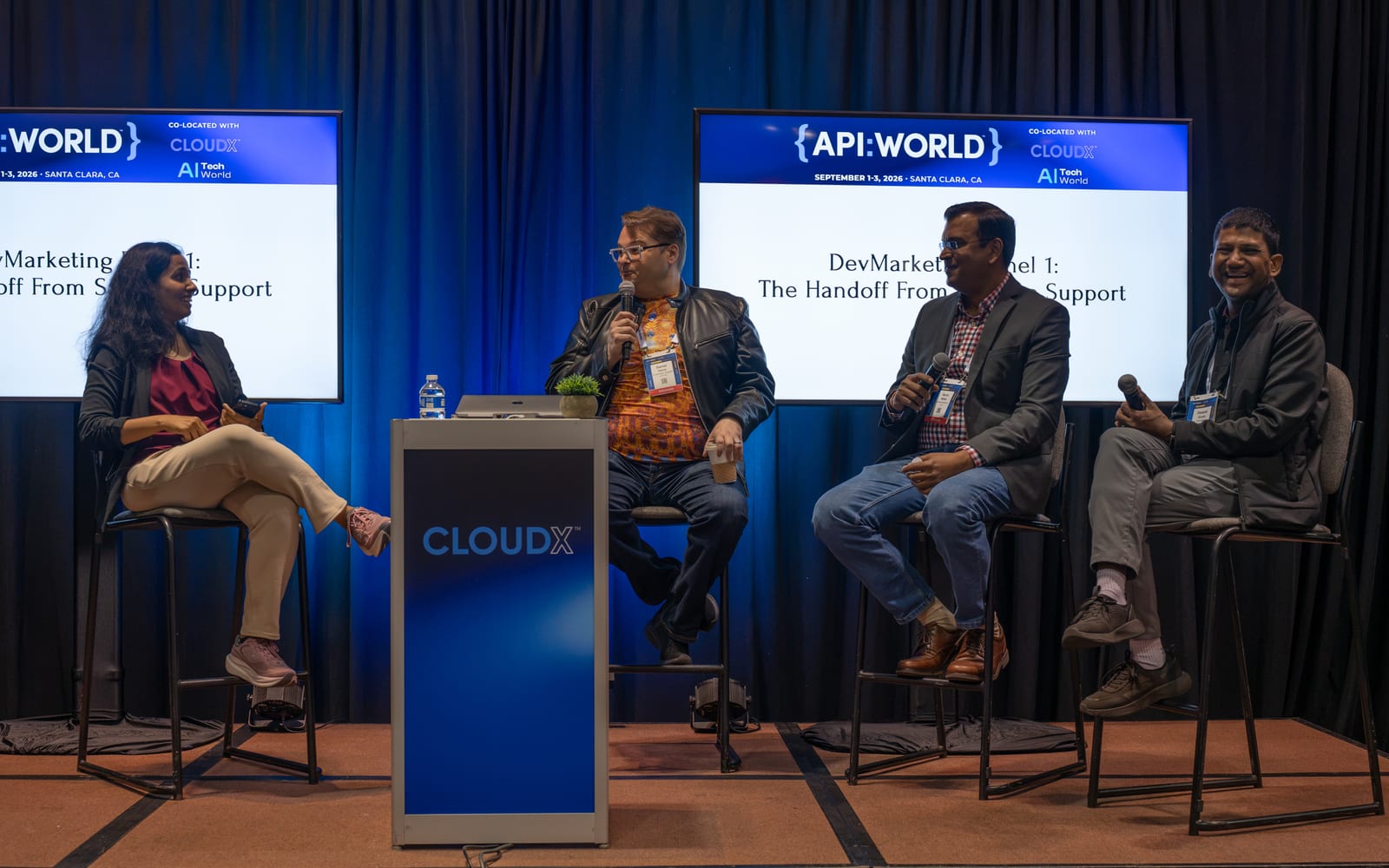
A panel on the moment a deal stops being a deal and becomes someone else's problem: the handoff from sales to support and customer success. Four operators who have all been on the receiving end of an optimistic sales call worked through where the handoff breaks, what AI is genuinely changing about it, and how to tell when it is actually finished.
On the program
- Format
- Panel (50 min)
- Stage
- CloudX Expo Innovation Stage
- Time
- 9:30 AM to 10:20 AM, after breakfast and networking
- Date
- September 3, 2026
On the panel
- Deepak Gupta, Co-Founder and Technical CEO, GrackerAI, Building Identity and Security Community (Start With Identity)
- Navin Mittal, Founder, VertexGrowth.AI
- Daniel Davis, Co-founder and CEO, TrustGraph
Moderated by Apurva Godghase, Lead Computer Vision Engineer, Brambles
What the panel worked through
The oversell dilemma
Sales teams are incentivized to close deals, sometimes by painting a very optimistic picture of what a product can do. How do you handle the handoff when support or customer success realizes the customer's expectations do not perfectly align with the current technical reality?
AI in the handoff
With conversational intelligence tools, every sales call can now be recorded and analyzed. How are teams using AI to automate the knowledge transfer between the account executive and the support or success team?
Defining done
At what exact moment is the handoff complete? The introduction email, the kickoff call, or the customer's first moment of real value?
Key takeaways
- The handoff has always been a knowledge transfer problem, and it is the first part of go-to-market where AI is genuinely good at the job. Call recordings, discovery notes, email threads, and past support tickets are one corpus. A model reads all of it. No human account executive writing a handoff doc at 6pm does.
- The value is not the summary, it is the extraction. What matters from a sales cycle is the set of specific commitments made, the objections that were never fully closed, and the gap between what the buyer believes the product does and what it does today. That is a structured extraction task, and it is the thing handoff templates have always failed to capture.
- Consistent messaging is the actual deliverable. When the pitch deck, the website, the documentation, and the support macros describe the product differently, the handoff breaks no matter how good the process is. Feeding every surface from one source of truth is what makes sales, success, and support say the same thing to the same customer.
- The same corpus makes the conversation product-led. Once support tickets and sales calls are readable together, the enterprise conversation moves from a demo script to what customers actually do with the product, where they get stuck, and which capability closes which deal.
- Everything you build for the internal handoff also teaches the models. The material that explains your product, its value, and the pain it removes is exactly what ChatGPT, Perplexity, Google AI Overviews, and Copilot read when a buyer asks them what to use. A clean internal knowledge base is a public discovery asset, whether you intended it that way or not.
- AI agents are becoming both the buyer and the first line of support. An agent doing product discovery needs a machine-readable answer to what this does, who it is for, and what it costs. An agent handling a customer question after the sale needs the same corpus. Companies that structure it once serve both.
- The after-sales half is where this compounds. Resolved tickets, onboarding sessions, and success plays are the highest-signal product documentation a company owns, and most of it never leaves the helpdesk. Publishing the safe subset of it improves deflection, onboarding time, and AI visibility at once.
- None of this removes the human judgment call. AI can surface that a promise was made and flag that it does not match the roadmap. Deciding what to tell the customer is still a person's job, and doing it in week one instead of month three is the whole difference.
From the room