
GEO for Monetization Teams
At Chargebee Beelieve '26
Buyers now put the shortlisting question to a model before they put it to a person. This session explained what answer engine optimization and generative engine optimization actually are, how an AI answer gets assembled from sources, and why the gap between the two matters to a B2B SaaS company. Delivered to a monetization audience, which turned out to grasp the argument faster than a marketing room usually does, and used to sharpen the version given at SaaStr three weeks later.
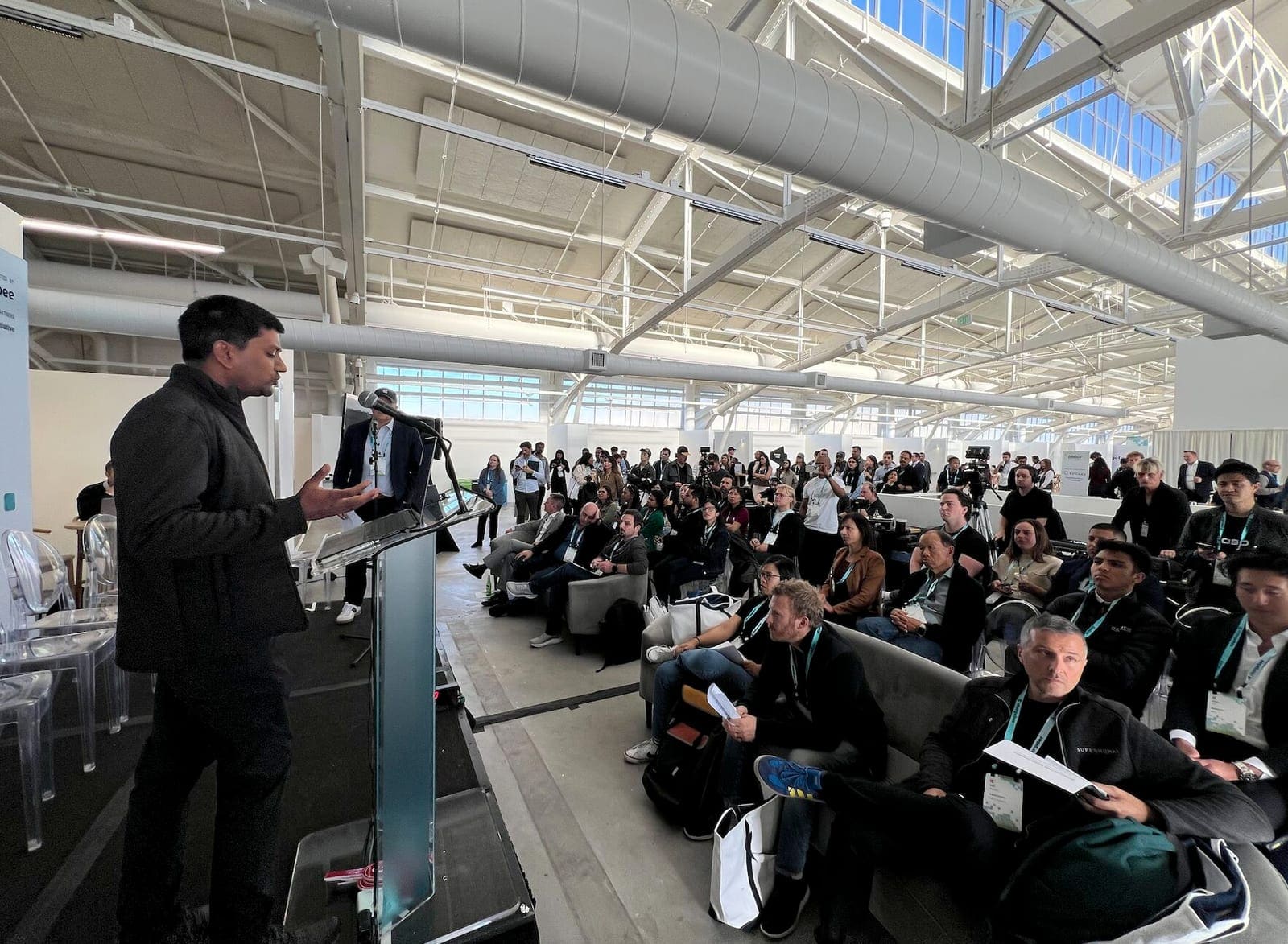
On the program
- Format
- Solo session
- Time
- April 15 to 16, 2026
- Date
- April 2026
What the talk covered
AEO and GEO are two different surfaces, not two words for one thing
Answer engine optimization is about being the direct response to a question, the single extracted answer a buyer reads and acts on. Generative engine optimization is about being one of the sources a model draws on when it synthesizes something new across several inputs. They reward different work. AEO rewards a clean, self-contained, extractable claim. GEO rewards being the authority a model reaches for repeatedly across a whole topic. A company that optimizes for one without understanding the other usually produces content that satisfies neither.
How an answer actually gets assembled
There is no ranked list underneath. A model retrieves a set of sources, judges which are authoritative, specific, and structurally readable enough to lean on, and writes a synthesized answer that cites some of them. Three things follow. There is no position two to climb toward. Being mentioned is not the same as being cited. And most of the citations that decide your answer point at pages you do not own: review sites, community threads, editorial coverage, analyst write-ups. The corpus you are being judged on is mostly someone else's.
Why this is urgent rather than interesting
The buyer behaviour is already in place. Enterprise buyers ask a model who leads a category, ask for a comparison, and arrive at a shortlist before any human conversation. Every part of a go-to-market motion a team currently instruments sits downstream of that. And when a company is missing from those answers, it is usually not because the product is weaker, it is because the systems producing the answer have no evidence they can attribute. That is a positioning and content problem, which is fixable on a far shorter timeline than a roadmap problem.
Why a monetization room got there first
Beelieve's audience skews to CFOs, revenue operations leaders, and founders working on pricing architecture. These are people who already argue about how a pricing model communicates value to a buyer. AEO and GEO is that same argument aimed at discoverability, so the premise needed no setup. The practical version for that room is concrete: how you describe your pricing decides whether a model can answer "how is this priced" correctly, or whether it guesses, hedges, or quotes a competitor instead.
The crossing-the-chasm dynamic now has an AI layer
Benedict Evans and Geoffrey Moore, who wrote Crossing the Chasm, set up the broader context at this conference: how categories evolve and how a company crosses from early adopters into the mainstream. This talk built on top of that. The crossing now has an AI search layer over it. Mainstream buyers need to understand your category, and separately, AI systems need to understand it well enough to place you inside their answers. Clearing the first and failing the second leaves you invisible at exactly the moment the market opens up.
What we are building at GrackerAI
GrackerAI is a generative engine optimization platform for B2B SaaS, built to answer the question every founder in that room asked next: where do I start. It measures what a company is currently cited for across the answer engines, shows where it is invisible, and works the gap. The discipline underneath is the point rather than the tool: baseline before you publish, treat AI visibility as something you measure rather than something you assert, and accept that most of the corpus deciding your answer is not on your own domain.
Key takeaways
- AEO and GEO are different surfaces. Answer engine optimization is about being the extracted answer; generative engine optimization is about being a source a model synthesizes from. Content built for one rarely serves the other.
- There is no position two. A model does not rank a list, it assembles an answer. A source is either specific and attributable enough to be cited or it is not.
- Being mentioned is not being cited, and most citations point at pages you do not own. Review sites, forums, and editorial coverage carry the majority of the corpus your answer is built from.
- A pricing page is a discoverability asset. How you describe a pricing model decides whether a model can answer "how is this priced" correctly or quotes a competitor instead.
- Absence from AI answers is usually a signal problem, not a product problem. That moves the fix from the roadmap to positioning and evidence, on a much shorter timeline.
- Measure before you publish. Find what you are cited for today and where you are absent. Anything written before that baseline exists is a guess.
- Monetization teams grasp this faster than marketing teams, because it restates a question they already work on: how does this communicate value.
Who it was written for
In the room
- B2B SaaS founders whose buyers research through AI before making contact
- CFOs and revenue operations leaders who own how pricing communicates value
- Marketing and growth teams watching organic search convert worse each quarter
- Anyone who has asked an AI assistant about their own category and not liked the answer
What attendees left with
- A working definition of AEO and GEO, and why the two need different content
- A plain account of how an AI answer is assembled, and what that rules out
- A first step that costs nothing: baseline what you are cited for before writing anything new
Related reading
- AEO vs GEO vs AIO: what these terms actually mean
- GEO vs SEO: what actually changes in the workflow, and what does not
- AI search is becoming the default for how B2B companies find and compare products
- The state of AI search in 2026: 42 statistics, every one sourced
- How to check your AEO and GEO visibility for free
- GEO Compass, the generative engine optimization reference
- GrackerAI, the GEO platform referenced in this talk
- LLM Visibility: The New GTM for B2B SaaS, this argument at SaaStr three weeks later