
How LLMs Drift: Citation Observability for ChatGPT, Perplexity, Google AI Overviews, and Copilot
At AI TechWorld 2026 (API World), AI TechWorld, part of API World 2026
Most teams treat LLM output as deterministic. Run the same prompt twice, get roughly the same answer, ship it. That assumption breaks the moment you start measuring. This session covers eighteen months of production citation tracking across ChatGPT, Perplexity, Google AI Overviews, and Microsoft Copilot, roughly 180,000 responses per customer per quarter: the pipeline architecture, why the naive first version failed, the drift patterns nobody discusses publicly, and what changes once you accept that the ground moves. Not a marketing talk, and not an evaluation framework pitch.
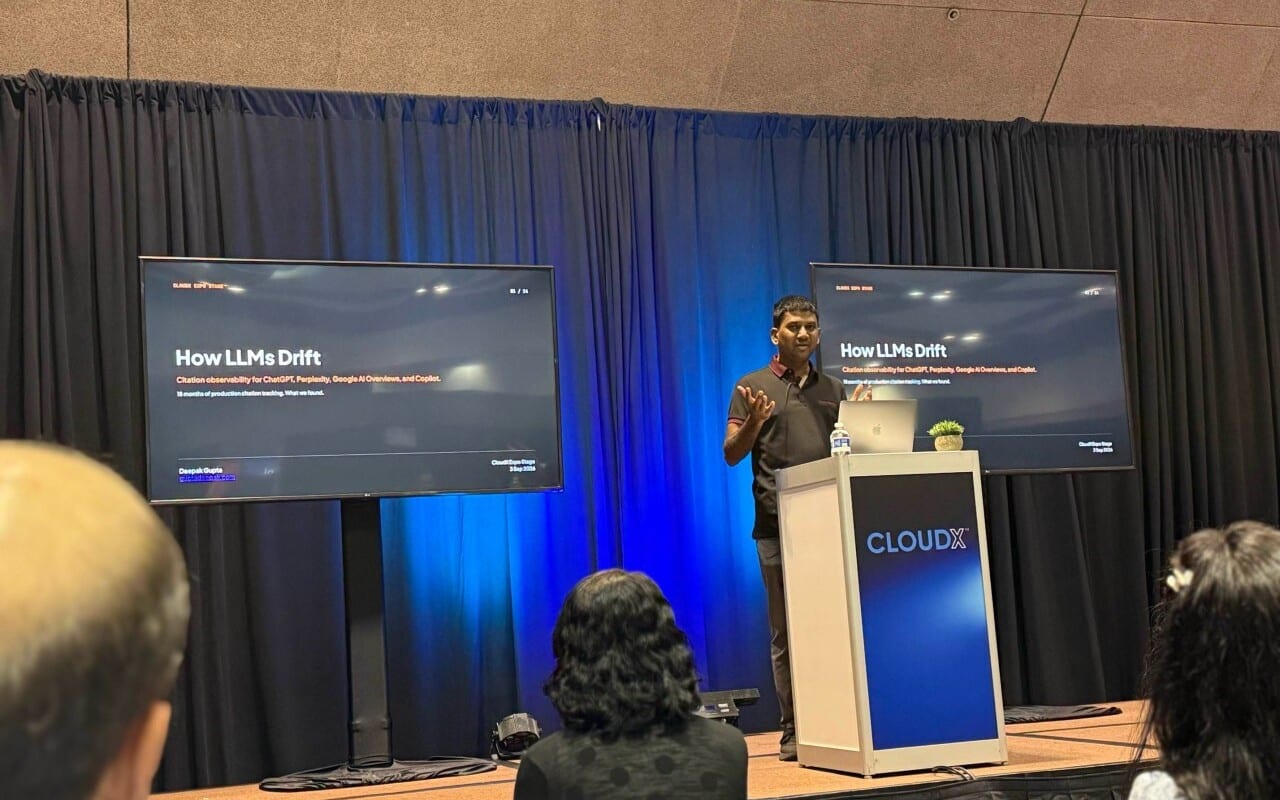
On the program
- Format
- Technical session (25 min)
- Stage
- CloudX Expo Innovation Stage
- Time
- 3:00 PM to 3:25 PM
- Date
- September 3, 2026
What the talk covered
The question that turns out to be hard
Every enterprise customer asks the same thing: am I being cited correctly? It sounds like a search question. It is an observability question, and answering it honestly requires three qualifiers the customer did not ask for. Cited correctly by whom, on which engine, and as of when? Remove any one of the three and the answer stops meaning anything.
Four classes of drift, four different clocks
Sampling noise runs on minutes and has no underlying cause. Index drift runs on hours and is where most competitive displacement actually happens. Event-driven shifts run over six to twenty-four hours around a breach, a funding round, a CVE, or a launch. Silent model updates run over weeks and void every historical comparison. Treating all four as one event is why naive alerting produces burnout instead of signal.
The architecture we built first, and why it failed
Poll each engine daily, diff the citation set against yesterday, alert on any change. Alert fatigue arrived in week two, because daily polling caught natural variance and reported it as drift with no per-engine baseline to compare against. There was no causal signal, so a change notification produced a Slack thread and no action. And scraping was the wrong primitive: four engines, four surfaces, four formats, four fragile scrapers to maintain instead of one system to operate.
What we run now
Persona-mapped prompt sets running hourly with jittered scheduling to dodge engine-side caching artifacts. A normalized citation schema across all four engines. Append-only storage, because you cannot detect drift in data you have already overwritten. Windowed comparison against a variance baseline computed per engine, alerting on statistical anomaly rather than on any change at all. Only two of those changes actually mattered: hourly cadence and per-engine baselines. The rest is plumbing.
Detection without a response plan is theater
Each drift class needs a defined owner and a defined window, and two of the four are opportunities rather than incidents. Noise gets folded into the baseline. Index drift gets a same-day content response. An event-driven shift gets action within hours, while the corpus is still being rewritten. A model update means re-baselining every tracked prompt and accepting that the old numbers are gone.
Key takeaways
- LLM output is not deterministic and it is not stable over time. The same prompt returns different answers across engines, across time, and across model updates that are never announced. Any system built on the assumption of stability is built on sand.
- AI visibility can drop 30% overnight with no model change. Copilot's citation set for a group of cybersecurity queries shifted more than 30% inside a six hour window after a news event. No version bump, no changelog, nothing to subscribe to. The retrieval index moved underneath the model.
- Winning one engine tells you nothing about the other three. ChatGPT and Perplexity agree on roughly 11% of cited domains for the same queries in the same window. A single-engine metric is not a visibility metric, and a blended score across engines hides the gap instead of revealing it.
- Only about 17% of citations point at your own domain. Across 180,000 tracked responses, review sites, community forums, and editorial coverage accounted for the overwhelming majority. Four in five citations point at a corpus you do not own and cannot edit.
- Most drift is noise. Some of it is your pipeline leaving. The four classes run on different timescales and demand different responses, and conflating them is the fastest way to teach a team to ignore alerts.
- Hourly monitoring is structurally different from daily monitoring. Sub-day events are real and frequent. A daily poll records one number and reports stability while a 30% shift happens and partially recovers between samples. Cadence is not a tuning parameter, it decides what you are capable of seeing.
- Detection without a response plan is theater. Knowing a score moved is worthless without knowing which class of change it was, who acts on it, and inside what window.
- Design for drift, not around it. Version baselines like code, timestamp every number you show a user, never cache a citation result without a defensible TTL, and treat correctness as a distribution rather than a value. You are not building on an API, you are building on a moving target that looks like one.
From the room
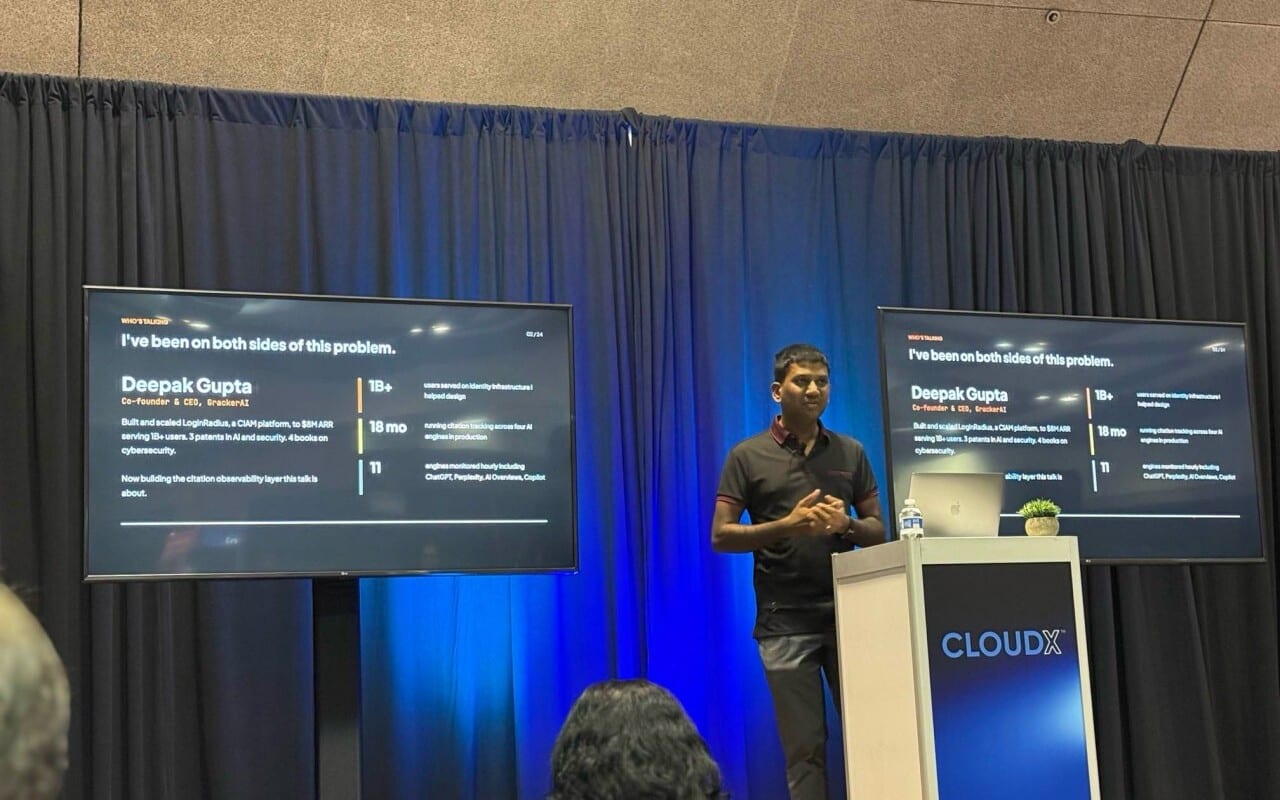
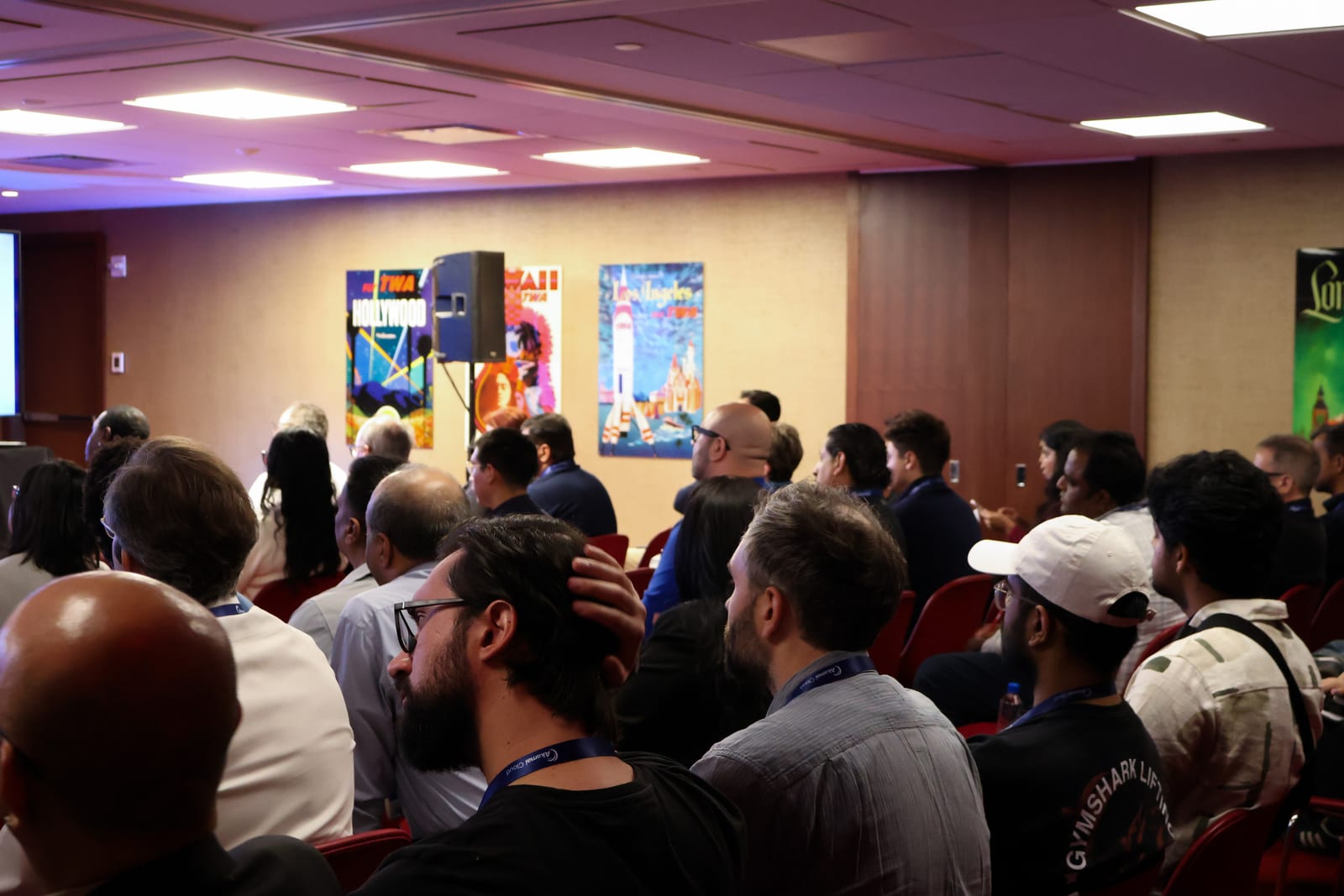
Who it was written for
In the room
- Engineers building evaluation infrastructure for LLM systems
- Teams shipping customer-facing LLM analytics
- Anyone running RAG systems where citation accuracy matters
- Product and platform teams who have to answer "did the model say what we expected?" for customers
What attendees left with
- A reference architecture for multi-engine citation monitoring at production scale
- The four-class drift taxonomy and the response playbook for each class
- A concrete first step: 20 prompts, 4 engines, append-only storage, one week to first signal