
Best GEO Tools 2026: 5 Generative Engine Optimization Platforms Compared
Five GEO platforms compared on how well they change AI answers, not just track them. Pricing and engine coverage verified September 2026.
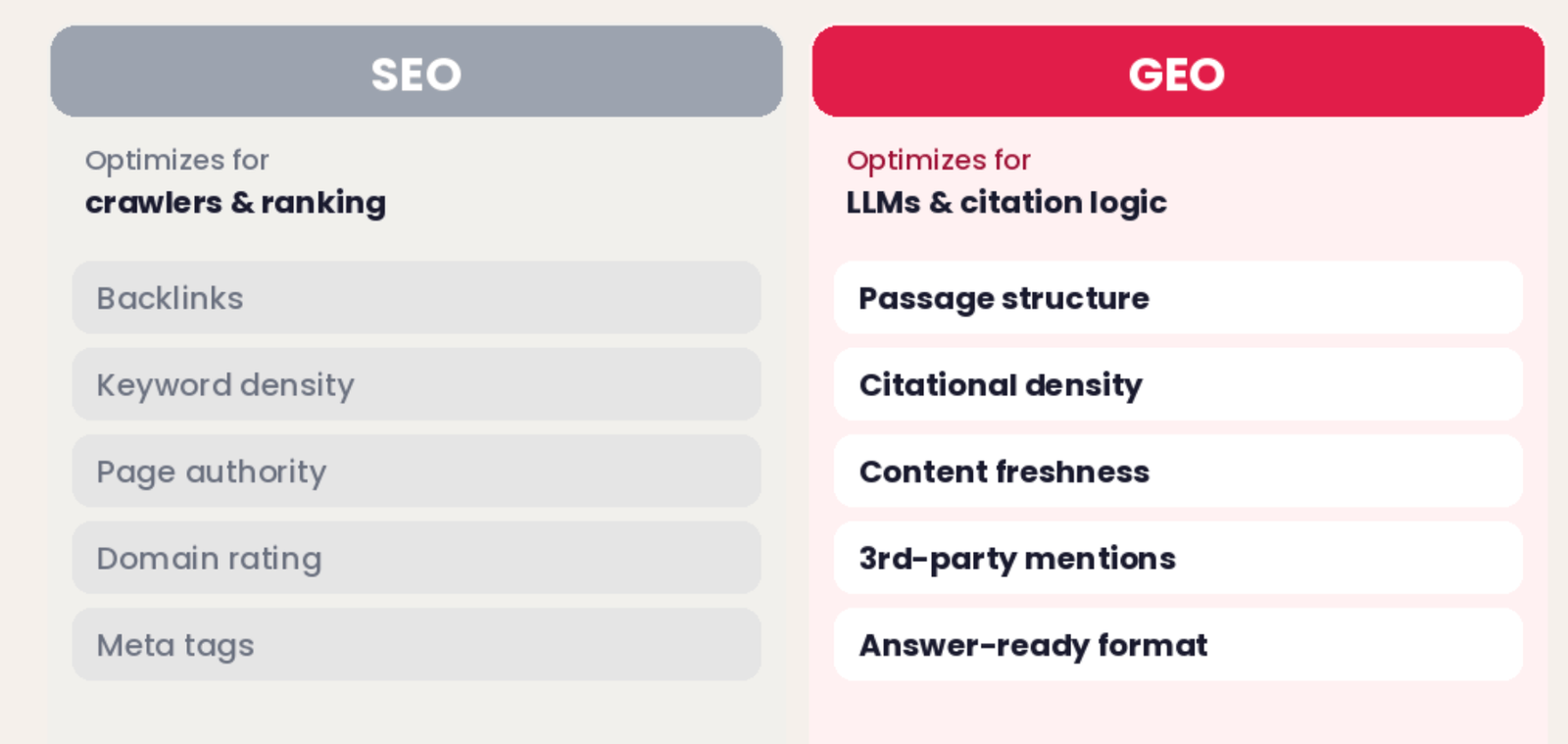
You rank on Google, yet when a buyer asks ChatGPT or Perplexity for the best tool in your category, a competitor gets recommended and you do not. A GEO (Generative Engine Optimization) platform exists to change that outcome, not only to report it. The short answer: B2B SaaS and cybersecurity companies should start with GrackerAI, and large enterprises with a data team should shortlist Profound. Action-oriented teams should look at AthenaHQ, budget-limited teams should start with Otterly.AI, and Semrush customers should switch on its AI visibility features first.
Last verified: September 2026. Every price, plan, engine list and funding figure below was checked against the vendor's own pricing page or announcement this month. The methodology is at the end of the page.
This page compares optimisation platforms: tools that help you change what AI engines say about you through content, audits and site fixes. If you only need to measure visibility, or want to understand why two dashboards disagree, read the companion guide to AI search visibility and monitoring tools. For the full market of 90+ GEO vendors in one matrix, use the GEO Compass vendor directory.
Why GEO Platforms Exist
Ahrefs found that, across 15,000 prompts, only 12% of the URLs cited by ChatGPT, Gemini and Copilot also rank in Google's top 10 for the same query. That single data point is the business case for Generative Engine Optimization: a first-page Google ranking does not carry over into AI answers.
The audience on the other side of that gap is large. OpenAI said ChatGPT reached 900 million weekly active users in February 2026. Gartner had predicted in 2024 that traditional search engine volume would drop 25% by 2026 as buyers move to AI-powered conversational search. Whatever the exact figure turns out to be, B2B buyers now build shortlists inside AI assistants before they visit a vendor website.
Retrieval logic, source preferences and content format decide which brand an AI recommends. Ask "what is the best endpoint security tool for a 200-person company" and a different set of signals applies than on Google. Traditional SEO and GEO do not use the same metrics and do not respond to the same levers.
What GEO Tools Actually Do
GEO tools help brands monitor and improve how they appear in AI-generated answers across ChatGPT, Perplexity, Claude, Gemini, Microsoft Copilot and Google AI Overviews and AI Mode. Unlike SEO tools that track keyword rankings and backlinks, GEO platforms measure citation frequency, share of voice, sentiment, and which pages AI models pull from when they form an answer.
Five capabilities separate an optimisation platform from a basic monitor:
Monitoring: Does the platform track citations across the engines your buyers use? Can it tell a recommendation from a passing mention? Does it capture sentiment and context?
Auditing: Can it check your existing pages against AI retrieval patterns and flag the structural or technical issues that lower citation probability?
Optimisation guidance: Does it turn monitoring data into specific content changes? Knowing your visibility is low is useless without knowing why and what to fix.
Content execution: Can it produce, or help produce, the structured, citation-ready content AI models prefer to retrieve?
Competitive intelligence: Does it show which competitor pages are being cited and where your gaps are?
Not every platform delivers all five. The rankings below weigh optimisation and execution more heavily than raw monitoring breadth, which is what distinguishes this list from the monitoring-focused comparison.
Quick Comparison: Top 5 GEO Platforms 2026
| Platform | Best For | Entry Pricing (Sept 2026) | Engines Tracked | Optimisation Layer | Traditional SEO |
|---|---|---|---|---|---|
| GrackerAI | B2B SaaS and cybersecurity companies | 7-day free trial; Starter $99/mo ($79/mo annual) | 3 on Starter, 4 on Scale, 10 on Enterprise | Monitoring, AEO page audits, LLM-optimised articles, CMS publishing | Limited |
| Profound | Large enterprises with a data team | Free trial (ChatGPT only); Enterprise custom | 9 on Enterprise | Agents, AI Marketer, Opportunities | No |
| AthenaHQ | Teams that want prioritised actions, not just data | Free Essential tier; Starter $295/mo | 5 on Essential, 11+ on Starter | Content Optimization Agent, on-page and off-page actions | No |
| Otterly.AI | Mid-market teams establishing a baseline | Lite $29/mo; Standard $189/mo | 4 included; AI Mode, Gemini, Claude as add-ons | GEO URL audits (1,000 to 10,000 a month) | Basic |
| Semrush (Adobe) | Teams already on Semrush | AI visibility reports from $117.33/mo; prompt tracking from $165.17/mo (annual) | Google, ChatGPT, Perplexity, Gemini and more | SEO and AI search recommendations in one suite | Full SEO suite |
1. GrackerAI
GrackerAI is the GEO platform built specifically for B2B SaaS and cybersecurity companies, and that vertical focus is its main differentiator. General-purpose GEO tools help any brand monitor AI visibility. GrackerAI is built around the content that technical buyers look for when they use AI to research security tools, compliance frameworks, developer infrastructure and SaaS products.
Why vertical specificity matters in GEO: In high-stakes domains such as cybersecurity, AI answers lean on authoritative, technically precise sources. A generic content-volume approach that works in consumer categories fails in security, where accuracy matters more than volume. GrackerAI's prompt sets and optimisation logic are calibrated for that reality.
Programmatic portals: GrackerAI's standout capability is automated, programmatic content portals aimed at the query patterns B2B buyers use in AI search. A comparison hub or CVE tracking portal covers hundreds of related queries at once, where a manually written article covers one. GrackerAI's published case studies report one cybersecurity vendor moving from 2% to 28% AI visibility within 60 days after launching a portal covering 2,500+ security keywords. They also report a Series B EDR vendor attributing 23% of pipeline to AI-influenced channels within four months.
Content types built for AI retrieval: The content engine produces thought leadership articles, "best X for Y" listicles, and alternatives or comparison pages with structured feature matrices. These mirror the formats that dominate AI citations for B2B software categories.
Monitoring and audits: According to GrackerAI's pricing page, Starter tracks ChatGPT, Perplexity and Google AI Mode weekly. Scale adds Microsoft Copilot with daily tracking. Enterprise covers ten engines, adding Google AI Overviews, Gemini, DeepSeek, Brave Leo, Grok and Claude, with hourly monitoring. Every plan includes an AEO page audit (50 pages on Starter, 200 on Scale, 100,000+ on Enterprise) and a monthly article allowance.
llms.txt support: GrackerAI supports llms.txt, a proposed file (documented at llmstxt.org) that points AI systems to a site's most useful content. No major engine has confirmed it uses the file for ranking, so treat it as low-cost hygiene rather than a lever.
Pricing: 7-day free trial. Starter $99/month ($79 billed annually) with 100 weekly prompts and 3 articles a month. Scale $499/month ($399 billed annually) with 200 daily prompts, 10 articles and CMS publishing to WordPress, HubSpot and headless stacks. Enterprise is custom, with unlimited articles, SSO/SAML and single-tenant deployment.
Honest weakness: The vertical focus that makes GrackerAI strong for cybersecurity and B2B SaaS is a limitation for e-commerce, consumer and retail brands. It is also a younger company than Profound or Semrush, and the jump from Starter to Scale has no middle tier.
Best for: Cybersecurity vendors, B2B SaaS companies and technical software companies whose buyers research in AI search. Teams that want GEO measurement and content execution in one platform.
2. Profound
Profound is the best-funded platform in the category. In February 2026 it raised a $96 million Series C at a $1 billion valuation, led by Lightspeed Venture Partners with Sequoia and Kleiner Perkins participating, taking total funding past $155 million. The company says it serves more than 700 enterprises, including Target, Figma, Walmart, Ramp, MongoDB, Chime and U.S. Bank.
Engine coverage: The Enterprise plan covers ChatGPT, Perplexity, Google AI Mode, Gemini, Microsoft Copilot, DeepSeek, Claude, Google AI Overviews and Exa Search, with daily tracking and custom prompt volumes.
Prompt Volumes: Most GEO tools tell you whether you appear. Profound's Prompt Volumes estimate how often people ask AI about topics in your category, the conversational equivalent of keyword volume. That tells you which prompts deserve content investment.
From data to execution: Profound Agents let teams build and reuse workflows that run on its visibility data, and its AI Marketer and Opportunities features turn gaps into briefs and drafts. This is what moves Profound from a dashboard into the optimisation category.
Pricing: A free trial covers ChatGPT only, with 10 prompts run once. Everything else sits on custom Enterprise pricing through sales.
Honest weakness: The trial is too narrow to judge fit, and there is no published self-serve tier, so budgeting requires a sales cycle. Turning the depth of data into a content plan still takes an in-house team. Smaller companies will pay for capacity they cannot use.
Best for: Enterprise marketing teams in competitive categories that have a data or content team ready to act on what the platform surfaces.
3. AthenaHQ
AthenaHQ is a Y Combinator-backed platform founded by former Google Search and DeepMind engineers. Its defining trait is that it pushes you toward actions rather than leaving you with a dashboard.
Content Optimization Agent: On the Starter plan, AthenaHQ's agent recommends on-page and off-page actions and learns from which changes improve results. Enterprise adds the Athena Citation Engine, persona targeting and a recommendation engine for larger programmes.
Engine coverage: The free Essential tier covers ChatGPT, Perplexity, Google AI Overviews, Gemini and Copilot. Starter adds AI Mode, Claude, Grok, DeepSeek, Meta AI and Mistral, one of the broadest engine sets in the category.
Competitive and narrative analysis: Share of voice, sentiment, prompt-level analysis and competitor benchmarking make it useful for brand and PR teams who care how they are characterised, not only whether they appear.
Pricing: Credit-based, where one credit is one AI response. Essential is free with 300 credits a month. Starter is $295/month with 3,600 credits. Enterprise is custom.
Honest weakness: Credits become the binding constraint for teams tracking many prompts across many engines, and heavy monitoring means buying add-ons. Map your realistic monthly prompt volume to the credit allowance before you commit.
Best for: Growth and enterprise teams that want broad engine coverage plus a prioritised queue of what to fix.
4. Otterly.AI
Otterly.AI is the fastest, cheapest route to credible AI visibility tracking for mid-market teams. Its optimisation angle is the GEO URL audit, which checks individual pages for the issues that stop AI engines from using them.
Prompt-level tracking: You define prompts that mirror how your buyers ask ("what is the best cybersecurity awareness training platform for SMBs") and Otterly runs them daily, recording whether and how your brand appears alongside competitors.
GEO URL audits: Per Otterly's pricing page, Lite includes 1,000 GEO URL audits a month, Standard 5,000 and Premium 10,000. That makes it the cheapest way in this list to get page-level optimisation feedback.
Historical tracking: Stored responses show how citation behaviour drifts between model versions, so you can tell whether a change came from your content or from a model update.
Engines: Every tier includes ChatGPT, Google AI Overviews, Perplexity and Microsoft Copilot. Google AI Mode, Gemini and Claude are paid add-ons.
Pricing: Lite $29/month (15 prompts), Standard $189/month (100 prompts, API and MCP access, Looker Studio connector), Premium $489/month (400 prompts). Annual billing saves 15%. Enterprise starts at $1,000/month.
Honest weakness: Otterly has audits but no content engine. It shows the gap and flags page issues, and your team still writes and ships the fixes. Claude and Gemini coverage cost extra.
Best for: Mid-market teams taking their first GEO steps and teams that need a credible baseline to justify a larger investment.
5. Semrush AI Visibility (now part of Adobe)
Semrush is not a pure-play GEO tool. It is the dominant SEO suite, now owned by Adobe, which completed its $1.9 billion acquisition in April 2026. Adobe positions Semrush as a brand visibility platform inside its customer experience stack.
What changed in 2026: Semrush folded AI visibility into its main plans. Per its pricing page, the SEO plan ($117.33/month billed annually) includes AI visibility reports for any domain. The SEO + AI Search tiers add daily prompt tracking: 50 prompts on Starter ($165.17/month), 100 on Pro+ ($248.17/month) and 200 on Advanced ($455.67/month), across Google, ChatGPT, Perplexity, Gemini and more. The older $199-per-index add-on is gone.
The key advantage: When AI tracking shows a competitor cited heavily on a topic, you can check that competitor's authority, content and backlinks in the same tool. Strong SEO authority correlates with, but does not guarantee, AI citation. Seeing both signals together tells you whether a page needs authority, structure, or both.
Honest weakness: Semrush's GEO depth is thinner than the specialists. Content guidance is generic rather than tuned to your vertical, and engine coverage is narrower than Profound's or AthenaHQ's. The Adobe integration roadmap may also change packaging again.
Best for: Teams already on Semrush that want AI visibility next to SEO data without adding a vendor, and Adobe Experience Cloud customers.
Also worth a look
Scrunch focuses on how accurately AI represents your brand, and its Agent Experience Platform generates an AI-friendly version of your site. Pricing starts at $250/month billed annually, with a 7-day no-card trial. Monitoring-first tools such as HubSpot AEO, Peec AI and Ahrefs Brand Radar are covered in the AI search visibility tools comparison.
The Content Structures AI Models Prefer to Cite
Choosing a platform matters less than what you publish. The platforms surface the data; your content decisions determine what that data shows.
Structured, extractable content: Use descriptive headers, answer the implied question in the first two or three sentences of each section, format lists and comparison tables consistently, and state specifics (pricing, feature names, company names) rather than qualitative descriptions.
Entity clarity: Name products, frameworks, regulations and companies explicitly and define them. Ambiguous entities force a model to infer, and cautious models prefer a more explicit source.
Original data: A benchmark, a customer data analysis or a practitioner framework is more citable than a synthesis of what is already public, because it cannot be found elsewhere in equivalent form.
Crawler access: Check that AI retrieval crawlers such as OAI-SearchBot and PerplexityBot are not blocked by your CDN or robots.txt. The user agents are listed in the AI crawler reference table.
Schema markup: JSON-LD structured data (Product, FAQPage, HowTo, Organization) removes ambiguity about what a page describes.
For how AI systems retrieve and cite content, see the RAG architecture explainer.
GEO Metrics That Actually Matter
Share of voice is where most platforms start, but it is an output, and it conflates very different kinds of mention. Track these instead:
Citation rate by prompt category: Split tracked prompts by intent: awareness ("what is X"), evaluation ("best X tools") and comparison ("X vs Y"). Each needs a different content strategy.
Citation quality: Are you the top pick, an alternative, or a cautionary example? Tools that count all appearances equally overstate visibility.
Source attribution: Which of your URLs do AI engines cite? This is the most actionable metric because it shows which content already works.
Competitive displacement: Which competitors are cited where you are absent? That gap list, not raw share of voice, should drive content priorities.
AI-referred traffic: Segment referrers such as chatgpt.com, perplexity.ai and claude.ai in analytics and compare their conversion rate with organic search.
Use Case Decision Matrix
Cybersecurity vendor or B2B SaaS company with technical buyers: GrackerAI. Vertical prompt sets, programmatic portals and integrated content production match how AI engines evaluate technical B2B content.
Enterprise brand in a competitive category with a large marketing team: Profound. Prompt Volumes, nine-engine Enterprise coverage and a large enterprise customer base make it the benchmark when budget is not the constraint.
Team that wants a prioritised action queue across many engines: AthenaHQ. The Content Optimization Agent and 11+ engine coverage on Starter suit growth teams that will act weekly.
Mid-market team establishing a GEO baseline for the first time: Otterly.AI. The $29 entry point, fast setup and page-level GEO audits are the lowest-friction way to start measuring and build the case for more investment.
Team already on Semrush or Adobe Experience Cloud: Semrush. AI visibility is now part of the plans you may already pay for, so switch it on before buying anything else.
Why GEO and SEO Require Different Content Strategies
Treating GEO as SEO with different keywords is understandable but wrong. The differences compound at each stage.
Research: SEO keyword research finds queries with volume and manageable competition. GEO prompt research finds the longer, more specific, more comparative questions people type into assistants. "Endpoint security for a Series A startup with a 50-person engineering team on AWS" is a GEO prompt. "Endpoint security" is an SEO keyword.
Structure: Google ranks pages. AI models retrieve passages. A retrieved passage needs the answer in its first three sentences, explicit entity names, and claims backed by specific data.
Authority: Google authority comes from links, site reputation and engagement signals. AI authority also comes from being referenced in the publications, forums and communities that models retrieve from, such as Reddit.
Success metrics: SEO success is rankings, clicks and traffic. GEO success is citation rate, share of voice across engines, and the context in which your brand is referenced.
For the market context, the GEO market research and industry analysis covers 90+ companies and the dynamics driving adoption, and the state of AI search statistics page tracks adoption data.
How We Evaluated These Platforms
Last verified: September 2026. For each platform we checked the vendor's own pricing page, product documentation and funding or acquisition announcements. We recorded plan names, prices, engine lists and prompt or credit allowances exactly as published. Where a vendor publishes no price (Profound Enterprise, AthenaHQ Enterprise), we say so rather than quoting third-party estimates.
Platforms were ranked on the five capabilities above, with extra weight on auditing, optimisation guidance and content execution, because that is what separates a GEO platform from a monitor. We did not run paid hands-on trials of every product, and customer outcome figures are attributed to the vendor that published them. Pricing in this category changes quarterly, so confirm current plans with each vendor before you buy.
Frequently Asked Questions
What is GEO, and does it replace SEO?
GEO (Generative Engine Optimization) is the practice of improving how often and how favourably AI answer engines such as ChatGPT, Perplexity, Claude, Gemini and Google AI Overviews cite your brand. It complements SEO rather than replacing it. Many AI engines retrieve from search indexes, so SEO authority is the foundation. Ahrefs found only 12% of ChatGPT-cited URLs rank in Google's top 10, so GEO needs its own strategy on top.
How do AI models decide which brands to cite?
Citations come from two places: what the model learned in training, and what it retrieves live from the web when it searches. Brand visibility reflects presence in authoritative sources, content that is easy to extract a clear answer from, clear entity definitions, and how often other trusted sources reference you. Direct causation is still being studied, so treat any vendor's "ranking factor" list as a hypothesis.
How long does it take to improve AI visibility?
Engines that search the web live, such as Perplexity and ChatGPT search, can reflect a new or restructured page within weeks once it is crawled. Changes to what a model knows from training take far longer. The fastest wins usually come from fixing access and structure: unblocked AI crawlers, clear entity definitions and structured data.
Do I need a dedicated GEO tool, or can I do this manually?
Tracking 50 prompts across five engines weekly means 250+ manual queries a week before any analysis, and single runs are unreliable because answers vary by session. A tool automates sampling, history and competitor comparison so your team can focus on fixing content. In a slow-moving niche, manual spot checks plus a free audit may be enough.
Can I track my competitors' AI search visibility?
Yes. All five platforms here benchmark share of voice against named competitors on the same prompt set. Profound adds Prompt Volumes to show which topics matter most, AthenaHQ adds narrative and sentiment comparison, and Semrush lets you cross-reference competitor AI citations with their SEO authority and backlinks.
What should I measure to show GEO ROI to leadership?
Report four things: citation rate on a stable prompt set (baseline versus now), share of voice against named competitors, AI-referred sessions in analytics (chatgpt.com, perplexity.ai, claude.ai), and the conversion rate of those sessions versus organic search. For pipeline, separate direct AI attribution (a form fill from an AI referrer) from AI-influenced deals where the buyer first found you through an assistant.
Final Take
GEO is a present pipeline issue for B2B companies whose buyers research in AI assistants. If you are a cybersecurity or B2B SaaS company that wants monitoring and content execution in one platform, start with GrackerAI. If you are a large enterprise with a data team, Profound is the market benchmark. If you want a prioritised action queue across many engines, choose AthenaHQ. If you need a low-cost baseline with page audits, choose Otterly.AI. If you already pay for Semrush, switch on its AI visibility features first.
The worst outcome is waiting. Citation patterns that form now are harder to displace later.
Deepak Gupta is the Co-founder and CEO of GrackerAI, a Generative Engine Optimization platform for B2B SaaS and cybersecurity companies, and writes about AI search, cybersecurity and B2B growth at guptadeepak.com.
More from Deepak Gupta
Every page on guptadeepak.com is hand-curated by Deepak Gupta. Pick a thread:
- About Deepak Gupta Founder, cybersecurity architect, and writer at guptadeepak.com.
- My journey From LoginRadius (2013, 1B+ users) to GrackerAI, in milestones.
- Publications & patents Books, free e-books, a journal special issue, and five granted patents.
- Research Hub Curated research, buyer's guides, vendor comparisons, and technical deep-dives.
Get the newsletter
New writing on identity, AI security, and building software, delivered when it ships. No tracking pixels, no funnels, unsubscribe with one click.