

CPU
What Is CPU Cache? L1, L2, and L3 Explained
CPU cache is the fast memory between the cores and main memory. What L1, L2, and L3 each do, why cache lines are 64 bytes, and when more cache actually makes a processor faster.
Writing
Page 3 of 25.
CPU cache is the fast memory between the cores and main memory. What L1, L2, and L3 each do, why cache lines are 64 bytes, and when more cache actually makes a processor faster.

WebAuthn Level 3 became a W3C Recommendation on 25 August 2026. Encryption key derivation, cross-domain credentials, and automatic list syncing are now first-class. Here is what changed.

The AI observability market split into four segments (infra telemetry, dev tooling, runtime security, autonomous remediation) with a wave of 2025-2026 acquisitions behind it. None of them own whether an agent behaved correctly.

Twelve weeks of planning, sponsor outreach, campus marketing, developer acquisition, and judge selection: what makes a hackathon worth remembering.

One prompt becomes many retrievals. You compete in each and see only the one you targeted, which is how top rankings produce no citation.

Dozens of people cancelled Claude subscriptions over a feature with no effect on their rankings. What the watermark actually is, why the copyright argument circulating about it is backwards, and the constraint that was binding all along.

Most founders treat fundraising as a personality test. It is a process with a start date, a list, and a close. Here is the sequence, and the playbooks.

India turns 79 today. Before any accelerator or investor, India installed the operating system I still build on: resourcefulness, jugaad, and the refusal to accept that something cannot be done. A reflection on going from back office to reference implementation.

Google's official 2026 guidance says optimizing for AI search is still just SEO. Meanwhile Semrush's own data shows just 51% domain overlap between AI Mode and organic results.

Most AI search statistics have no traceable source. These 50 name the producing organisation, the period, and the method, verified September 2026.

Three RFPs out, three decks back, cheapest bid wins, and six months later you are over budget. The problem is the selection process, not the firms.

Everyone argues about auth pricing. Almost nobody accounts for what identity actually costs per closed deal, or notices the invoice founders obsess over is the smallest of four identity costs.

Adobe does not make impulsive acquisitions, yet it put a ten-figure price on a discipline critics were still calling fake. Acquisition prices are the most honest signal in tech.

Prompt engineering is overrated. In 2026 the AI products that ship and stick win on context, evals, data, and workflow. Here is the stack that actually matters.

ChatGPT layers citations onto an answer. Perplexity builds the answer from citations. The four engines are not one surface.

Most founders build outbound infrastructure on top of a contact list that is already about 22.5 percent stale within a year. Discovery, verification, and enrichment are three different problems, and skipping verification is what wrecks deliverability.

A leaked static key is a disaster; a five-minute token is mostly a shrug. Here is the credential lifecycle that gets AI agents from 24-hour tokens to ephemeral ones.

Your data isn't ready for AI, and that's good news. It means you found the problem before you built on it. What LoginRadius, GrackerAI, and LogicBalls taught me about the gap between organized data and AI-ready data, plus the 2025 numbers on why it sinks most projects.
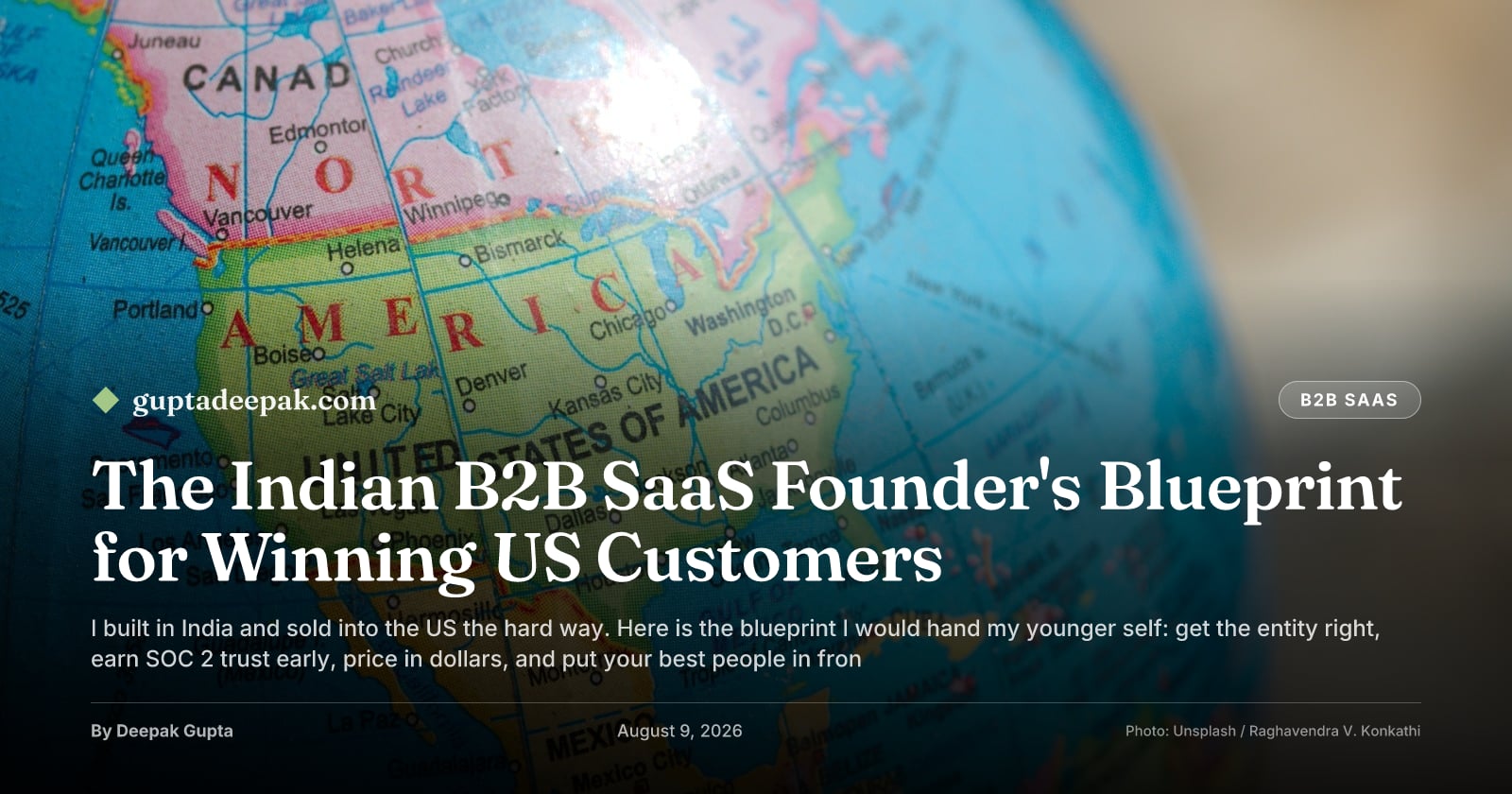
I built in India and sold into the US the hard way. Here is the blueprint I would hand my younger self: get the entity right, earn SOC 2 trust early, price in dollars, and put your best people in front of US buyers.
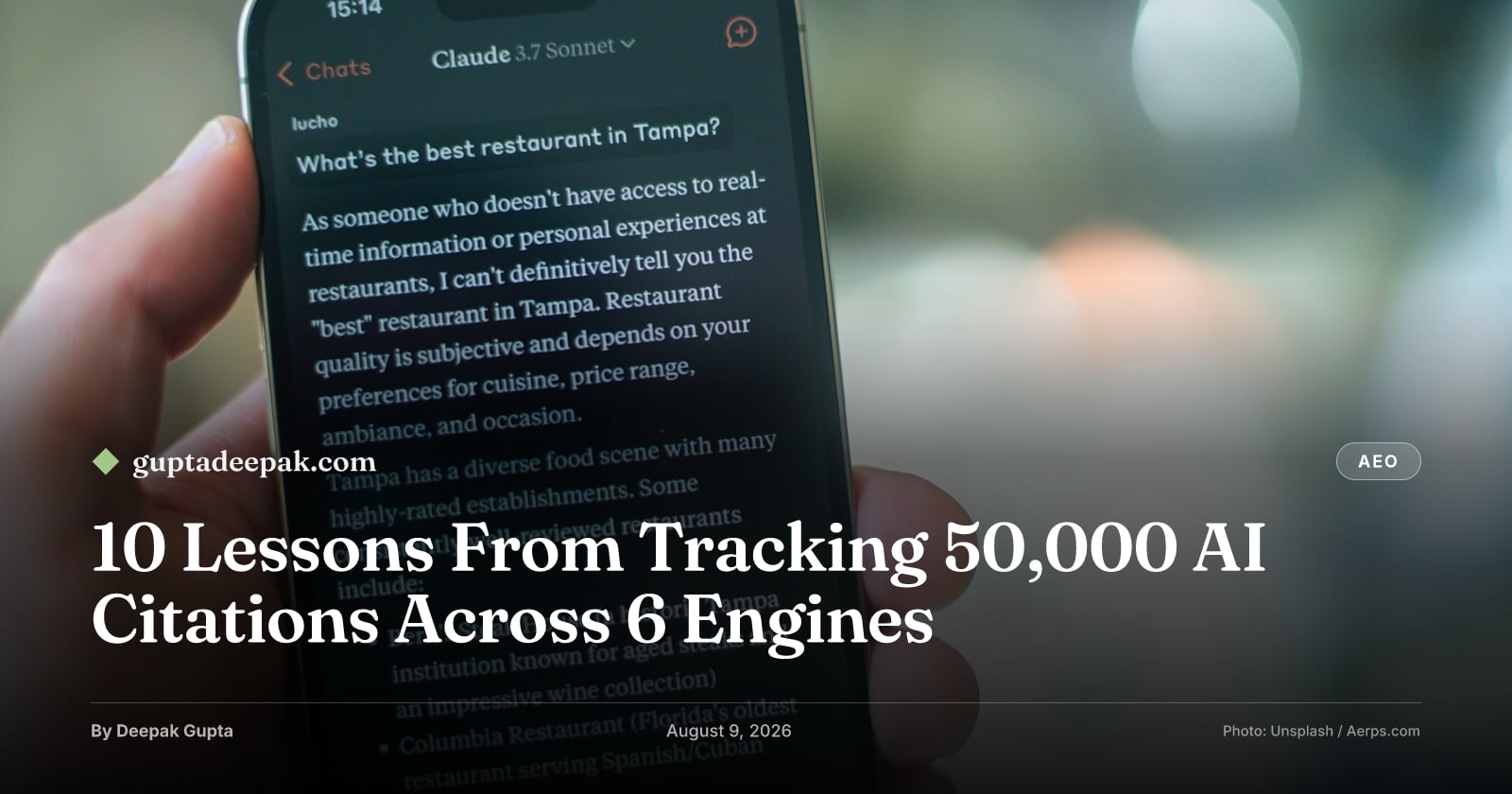
Over 90 days I tracked how six AI search engines cite sources across 50,000+ B2B software responses. The data broke several assumptions the GEO industry treats as settled, starting with the idea that AI visibility is one thing you can optimize for.

Shadow AI is an employee pasting into ChatGPT. A shadow agent holds real credentials and acts on its own. That is a different, and bigger, problem.
The crawl and authority layer is unchanged. Retrieval moves from page to passage, and the outcome moves from click to citation.
An enterprise prospect just asked for your SOC 2. Here is what the report really is, Type I vs Type II, the ten policies auditors expect, and how Vanta and Drata changed the work.

Black Hat and DEF CON pull millions in marketing spend to Las Vegas this week. AI engines that buyers ask afterward do not weigh booth size. They weigh whether your research is structured, specific, and citable.
Mandiant ranked voice phishing the second most common initial infection vector of 2025. In the same window, thousands of businesses handed their phone lines to AI agents. Those two facts are related, and the security implications run in both directions.
In a monolith you check who someone is once. In microservices, every hop has to ask again. Here is how I design authentication and authorization across services: edge auth, per-service verification, workload identity with SPIFFE, and centralized policy.
MCP is Anthropic’s open standard for connecting AI agents to your tools and data. Here is what it actually is, how it differs from a REST API, and a clear rule for when to use each in 2026.
AI does not read your page. It retrieves a fragment and decides whether that fragment answers the question on its own.
IAM decides who gets in the door. PAM controls the keys that can rewire the building. Here is the real difference, where they converge in 2026, and why your AI agents need both.
Passkeys demo better than any login method ever shipped. Most deployments still cannot get anyone to turn them on. Both numbers are true.