
Implementation blueprint
B2B SaaS CIAM with organizations, roles, and enterprise SSO
For: Engineers and architects building a multi-tenant SaaS where customers are companies.
Updated 2026-07-19
Problem context
In B2B SaaS the buyer is a company and the users belong to it. Every enterprise customer eventually asks for the same things: log in with our IdP, provision and deprovision users automatically, scope roles to our tenant, and give us an audit log. If identity was built user-first, each of these becomes a painful retrofit.
The unlock is to model the Organization as a first-class object and the configuration boundary for SSO, SCIM, domains, roles, and branding. Users then belong to one or more organizations, and enterprise features attach to the Organization rather than to the app globally.
Reference architecture

Core flows
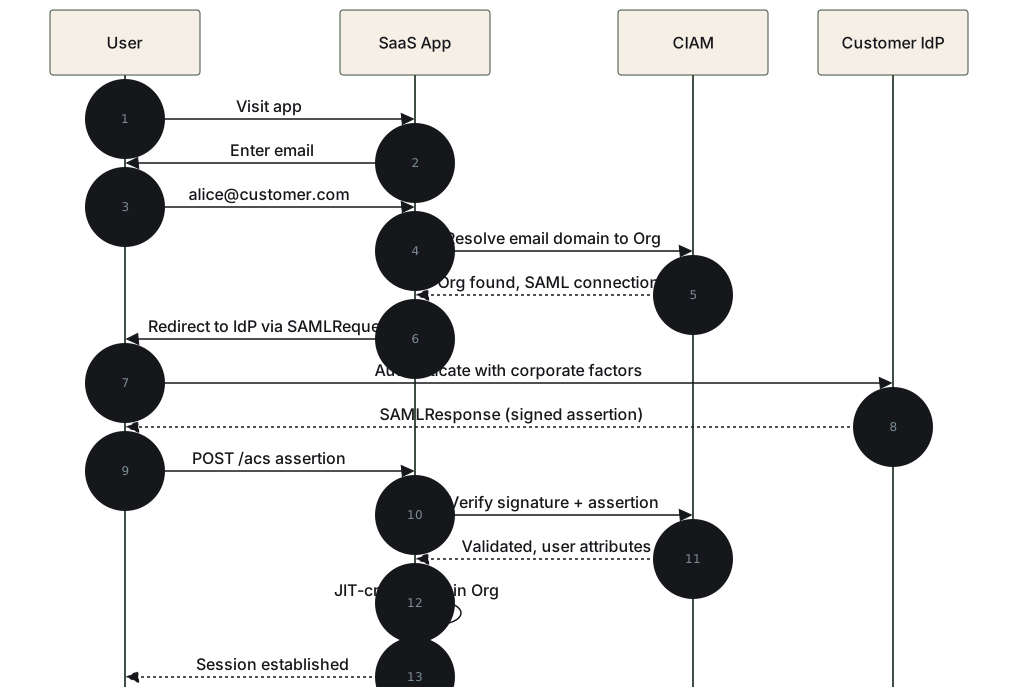
Enterprise SSO login (SAML / OIDC)
A verified email domain routes the user to their organization's SSO connection. The IdP asserts identity; the CIAM issues app tokens scoped to that organization.
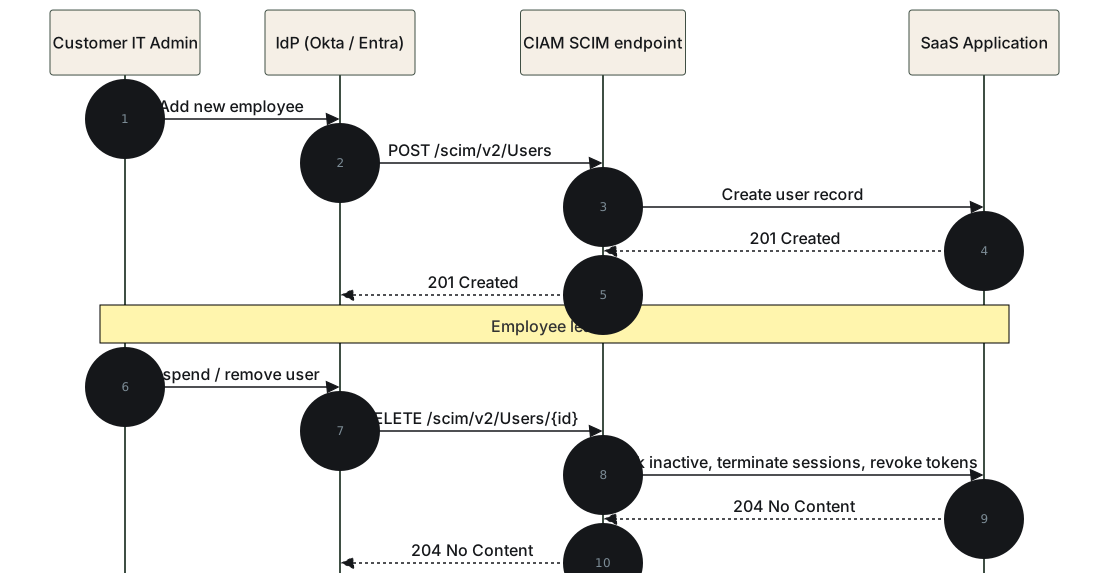
SCIM provisioning
The customer's IdP pushes user create, update, and deactivate events to the CIAM via SCIM, so joiners and leavers are handled without manual admin.
Organization data model
Users belong to organizations; roles, SSO, domains, and audit all attach to the organization, not the global app.

Data objects & boundaries
- Organization / tenant
- The configuration boundary: owns SSO connections, SCIM, verified domains, roles, and audit settings.
- User
- May belong to more than one organization; identity is global, membership and roles are per-org.
- Membership
- The user-to-organization link that carries the user's role within that tenant.
- Role / permission
- Scoped to an organization; enterprise buyers expect custom roles and least privilege.
- SSO connection
- Per-organization SAML or OIDC configuration, routed by verified email domain.
- Audit event
- Tenant-scoped, exportable log of auth and admin actions.
Required standards & protocols
- OpenID Connect (OIDC) for app authentication
- SAML 2.0 and OIDC for enterprise SSO federation
- SCIM 2.0 for user provisioning and deprovisioning
- OAuth 2.1 for API authorization
Build-vs-buy decisions
| Decision | Build if | Buy if |
|---|---|---|
| Enterprise SSO (SAML + OIDC) | You have deep IdP expertise and only a handful of connections. | You need self-serve SSO across many customer IdPs, which is almost always. |
| SCIM provisioning | Rarely worth building; the spec is fiddly and per-IdP quirks are many. | You want reliable joiner/leaver automation without maintaining SCIM yourself. |
| Organization / tenant model | Your tenancy rules are unusual and central to your product. | Standard org/role/membership needs; a platform gets you there faster. |
| Authorization (roles, FGA) | Simple RBAC that maps cleanly to your domain. | You need fine-grained, relationship-based access across resources. |
Weigh the whole picture with the build-vs-buy worksheet.
Anti-patterns
Bolting tenancy on later
Adding organizations after launch means rewriting authz, data access, and the user model. Model the Organization first.
Reusing workforce IAM (Okta Workforce, Entra ID)
Workforce IAM is priced and designed for employees, not for your customers' end users; it does not fit B2B SaaS economics or UX.
One SSO connection for all tenants
Enterprise customers each bring their own IdP; SSO must be per-organization and self-serve.
No tenant-scoped audit log
Security reviews stall without per-tenant, exportable audit trails; retrofitting logging is painful.
Implementation checklist
- Model the Organization as the configuration boundary before writing auth code
- Support users belonging to multiple organizations
- Route SSO by verified email domain
- Offer self-serve SAML and OIDC connection setup
- Automate provisioning and deprovisioning via SCIM
- Scope roles and permissions to the organization
- Emit a tenant-scoped, exportable audit log
- Plan a path from RBAC to fine-grained authorization
What to require of a platform
- Native Organizations / tenants with per-org configuration
- Self-serve enterprise SSO (SAML and OIDC)
- SCIM 2.0 inbound provisioning
- Custom, org-scoped roles and permissions
- Per-tenant audit logs with export or streaming
- Delegated tenant administration
Related guides
Head-to-head comparisons
Industry context
Transformation patterns
FAQ
- Should I build the Organization model before or after launch?
- Before. SSO, SCIM, roles, and audit all attach to the Organization, so adding tenancy after launch means rewriting authorization and data access. Model it first even if you only have a few customers.
- Can I reuse workforce IAM (Okta, Entra ID) for my B2B customers?
- No. Workforce IAM is priced and designed for your own employees, not your customers' end users. It does not fit B2B SaaS economics or the self-serve UX enterprise buyers expect.