
Implementation blueprint
B2C e-commerce and consumer CIAM
For: Teams building high-volume consumer apps and storefronts where conversion and fraud both matter.
Updated 2026-07-19
Problem context
In B2C, every extra field and every unnecessary challenge costs conversion, but consumer apps are also the biggest targets for credential stuffing and account takeover. The design problem is minimizing friction for the 95% of legitimate logins while raising the bar exactly when risk is high.
The second half of the problem is data: progressive profiling gathers just enough about the shopper over time, and consent and preferences must be captured in a way that satisfies GDPR and CCPA and still feeds the CDP and marketing stack.
Reference architecture

Core flows
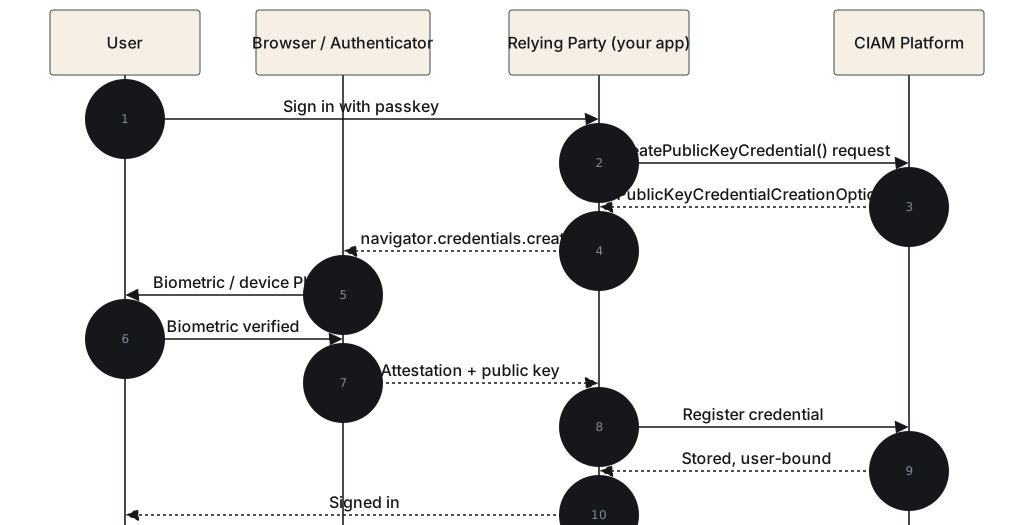
Passkey registration and login
Passkeys give a phishing-resistant, low-friction default. Fall back to social login or email OTP for users without a passkey yet.
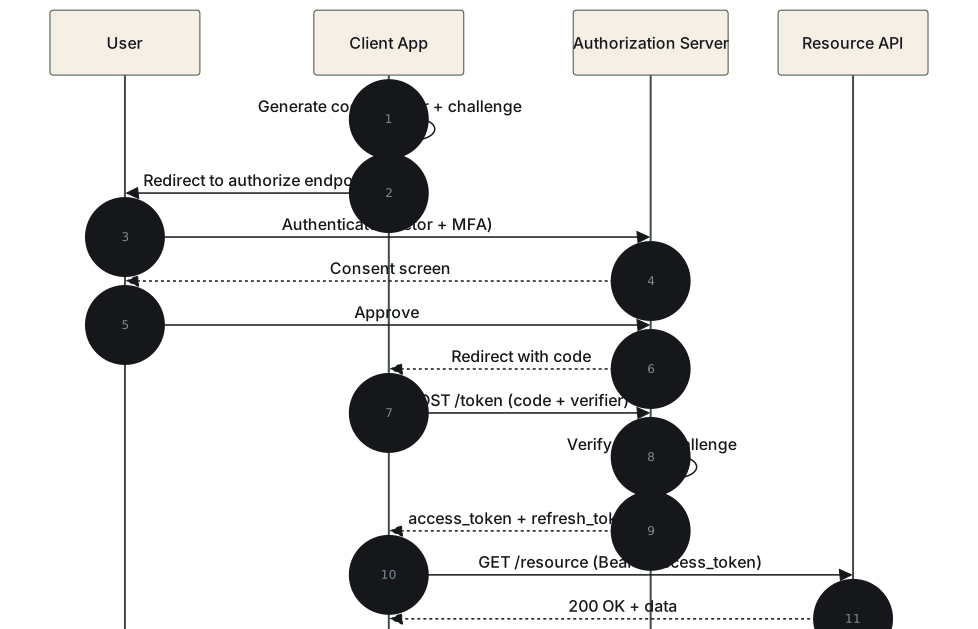
OAuth authorization code with PKCE
Public clients (SPAs, mobile apps) use the authorization code flow with PKCE to obtain tokens safely without a client secret.
Risk-based step-up at checkout
Most logins pass silently. The risk engine only challenges when signals (new device, impossible travel, velocity) cross a threshold, concentrating friction where fraud is likely.

Data objects & boundaries
- User / shopper
- Consumer identity, often started passwordless; may link multiple social identities.
- Profile
- Progressively enriched attributes; keep required fields minimal at signup.
- Consent record
- Purpose-specific, timestamped, versioned consent that governs downstream data use.
- Credential
- Passkey, social link, or OTP; store password hashes only if passwords remain.
- Risk signal / device
- Device fingerprint and behavioral signals feeding the risk engine.
Required standards & protocols
- OpenID Connect (OIDC) with the authorization code + PKCE flow
- WebAuthn / FIDO2 for passkeys
- OAuth 2.1 for API access
- IAB TCF or Global Privacy Control (GPC) for consent signals
Build-vs-buy decisions
| Decision | Build if | Buy if |
|---|---|---|
| Passwordless / passkeys | You have WebAuthn expertise and want full control of the UX. | You want passkeys, social, and OTP working across platforms without maintaining them. |
| Fraud / risk engine | You already run a mature fraud platform you can extend to auth. | You need adaptive, signal-driven step-up without building a risk pipeline. |
| Consent management | Your consent needs are trivial and single-purpose. | You need purpose-specific, revocable consent that integrates with a CMP and CDP. |
| Profile store at scale | You have specialized data needs. | You want a directory that scales to millions of MAU with low latency. |
Weigh the whole picture with the build-vs-buy worksheet.
Anti-patterns
Password-first signup
Passwords depress conversion and invite credential stuffing; lead with passkeys and social, keep passwords optional.
Blanket MFA on every login
Challenging every user tanks conversion; use risk-based step-up so friction lands only where fraud is likely.
Consent as a single signup checkbox
A blanket checkbox does not meet GDPR purpose-specificity and blocks clean marketing consent; capture granular, revocable consent.
Long fixed sessions with no re-auth
Consumer devices are shared and stolen; use step-up for sensitive actions like checkout and profile changes.
Implementation checklist
- Default to passkeys; offer social and email OTP as fallbacks
- Use the authorization code + PKCE flow for SPA and mobile clients
- Keep signup fields minimal; enrich via progressive profiling
- Add a risk engine and reserve step-up for high-risk events
- Capture purpose-specific, revocable consent with a preference center
- Add breached-password checks and credential-stuffing defenses
- Provide self-service data export and deletion
- Load-test the directory and login path at target MAU
What to require of a platform
- Native passkeys / WebAuthn plus social and email OTP
- Adaptive, risk-based authentication with step-up
- Bot defense and credential-stuffing protection
- Progressive profiling and a preference center
- Purpose-specific consent with CMP integration
- Proven scale and low login latency at your MAU
Related guides
Head-to-head comparisons
Compliance
Industry context
Transformation patterns
FAQ
- Should I make passkeys the default for a consumer app?
- Eventually yes, but roll out gradually: offer passkeys alongside social and email OTP first, nudge enrollment, and default to them once adoption is proven. Always keep fallbacks for users without a passkey.
- How do I reduce fraud without hurting conversion?
- Use risk-based step-up. Let most logins pass silently and only challenge on high-risk signals (new device, impossible travel) and sensitive actions like checkout. Blanket MFA on every login tanks conversion.