
Media and Entertainment Digital Trends: The 2020 Predictions, Scored in 2026
Three calls right, three wrong, and the biggest change in media was not on the 2020 list at all. The honest scorecard, with 2026 numbers.
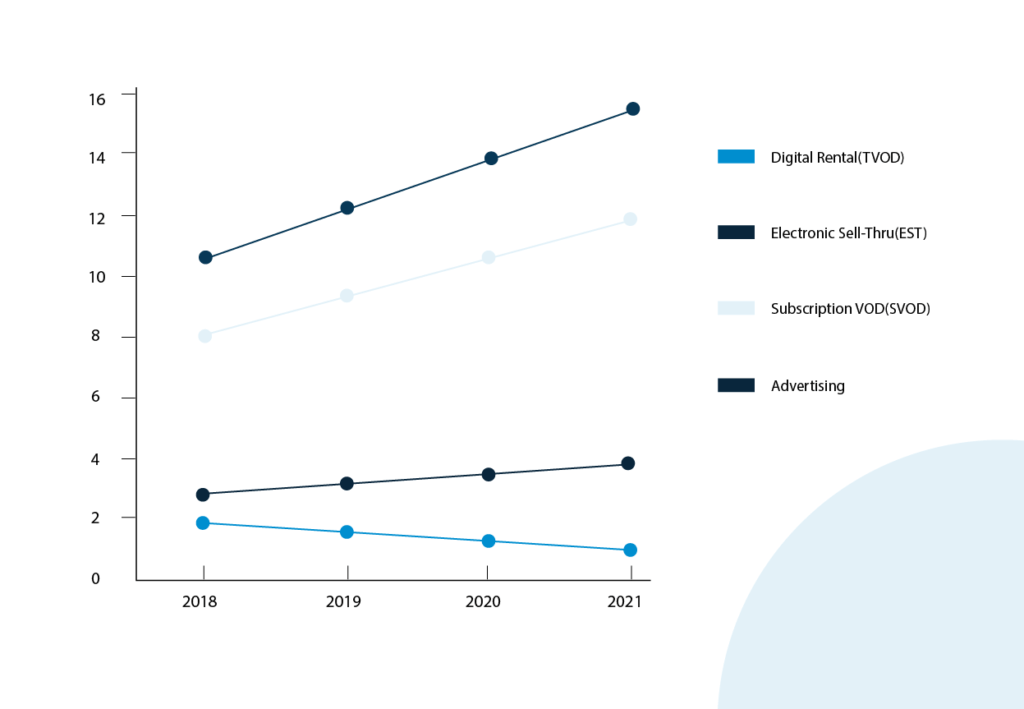
In February 2020 I published a list of the digital trends that would reshape media and entertainment. Six years on, three of those calls were right, three were wrong, and the biggest change in the industry was not on the list at all. This is the honest scorecard, with the 2026 numbers that settle each one.
I am leaving the original claims visible rather than quietly editing them, because a prediction post with the misses deleted is worthless to anyone deciding what to believe about the next forecast.
The scorecard
| 2020 prediction | Verdict | What actually happened by 2026 |
|---|---|---|
| Over-the-top streaming takes a new turn; US OTT video revenue passes 30 billion dollars | Right, and understated | Streaming passed half of all US TV viewing time |
| Personalisation makes media smarter through AI and analytics | Right, wrong mechanism | Recommendation stayed; generative AI became the fight |
| Privacy regulation rebuilds trust | Half right | Far more law, little evidence of restored trust |
| Blockchain reaches 1.54 billion dollars in media by 2024 | Wrong | The NFT market collapsed; the use case never arrived |
| AR and VR boost customer experience | Wrong on timing and form | Headset shipments fell; attention moved to smart glasses |
| Voice search reshapes media discovery | Wrong as framed | Voice survived, but chat interfaces took the behaviour |
| Cloud security management returns to the spotlight | Right | Now unremarkable, which is the definition of a trend landing |
| Facial recognition grows in advertising and media | Wrong in consumer contexts | Legal and reputational cost outran the benefit |
| CIAM and SSO gain momentum in media | Right | Identity became the subscription business itself |
What the 2020 post got right
Streaming won, by more than the forecast said
The 2020 piece cited an estimate that US OTT video revenue would pass 30 billion dollars. That bar was cleared and then some. Nielsen's The Gauge put streaming at 47.5% of all US TV viewing in December 2025, a record at the time, and at 49.0% in July 2026, with cable at 18.7% and broadcast at 19.5%. PwC's 2025 forecast, reported by Variety, projected the US streaming video market to grow about a third by 2029, to more than 112 billion dollars.
The detail worth noticing is which company won the attention. YouTube reached a record 14.2% of all US TV viewing in July 2026, ahead of every traditional network and every subscription service. In 2020, most industry forecasts treated YouTube as a website.
Personalisation mattered, but the argument moved
Recommendation systems did become table stakes, exactly as predicted. What the 2020 post could not see is that by 2026 the contested use of AI in media would not be recommendation at all. It would be production. SAG-AFTRA members ratified a TV and theatrical agreement in June 2026 that requires studios to notify the union before using synthetic performers, then bargain over the use, with arbitration and uncapped damages if agreement is not reached. Those terms build on the protections that ended the 2023 strike and the video game strike that settled in July 2025.
The prediction that "technology will personalise content" was correct and shallow. The real question turned out to be who gets paid when the technology generates the content.
CIAM and SSO became the business, not a feature
This is the call that aged best, and it aged in a direction the original post did not anticipate. In 2020 the argument for single sign-on in media was reducing registration friction. By 2026 the identity layer is the revenue model.
Netflix began enforcing paid sharing in May 2023 and added subscribers at a rate it had not seen since the pandemic, passing 300 million paid memberships by the end of 2024. Disney+ launched its own paid-sharing programme in September 2024, with an "extra member" add-on at 6.99 dollars on the basic tier. Deciding who counts as a household, and proving it without alienating paying customers, is an identity problem that now sits directly on the revenue line.
What it got wrong
Blockchain in media
The 2020 post cited a forecast of a 1.54 billion dollar blockchain media market by 2024. What happened instead: NFT trading volume fell 19% in 2024 to 13.7 billion dollars, the weakest year since 2020. Art NFT volume collapsed from 2.9 billion dollars in 2021 to 23.8 million dollars in the first quarter of 2025, roughly a 93% decline. Marketplaces closed. Rights management on a public ledger remains a reasonable idea that no major rights holder has needed.
The error was mistaking a funded narrative for a customer problem. There was never a queue of viewers asking for a ledger.
AR and VR as the next entertainment medium
Pokemon Go was the example in 2020. It was a good example of a hit and a poor example of a platform. By 2025, Apple shipped roughly 85,000 Vision Pro units, down about 78% year over year, and Meta's Quest shipments fell about 16% across the first three quarters of 2025 according to IDC. The category that grew was smart glasses, which are a display and a camera rather than an immersive medium.
The lesson is the one forecasting always relearns. A single successful product is not proof of a new medium.
Voice search as a discovery layer
Voice did not disappear; it was absorbed. The behaviour the 2020 post described, asking a machine a question in natural language instead of typing keywords, is now overwhelmingly happening in chat interfaces and AI assistants. Betting on the interface rather than the behaviour was the mistake.
Facial recognition in advertising and venues
This was predicted to grow in retail and media environments. In consumer-facing use it has instead become a liability, constrained by biometric privacy statutes, litigation, and consistently negative coverage of venue deployments. Biometrics did win in one place: on the user's own device, as the local unlock for a passkey, where the template never leaves the phone. That is the opposite of the 2020 prediction, which assumed the venue would do the recognising.
Privacy regulation rebuilding trust
Half right. The regulation arrived in volume. CCPA took effect in January 2020, and by 2026 roughly twenty US states have comprehensive consumer privacy laws in force, with more enacted and pending. Enforcement got real: in September 2025 France's CNIL issued cookie-related fines of 325 million euros to Google and 150 million euros to Shein.
What did not follow is trust. Consent banners trained a generation of users to click past disclosure, and the EDPB had to issue an opinion in April 2024 on whether "consent or pay" models produce freely given consent at all. More law produced more compliance work and better data-subject rights. It did not produce a public that feels better about how media companies handle their data.
What the 2020 list missed entirely
Advertising came back. No 2020 trend list predicted that premium streaming would rebuild the ad-supported television model it had spent a decade displacing. Netflix launched advertising in November 2022. At its 2026 upfront it claimed the ad tier reached more than 250 million monthly active viewers, up from 190 million in November 2025. It also said it was on track to roughly double ad revenue to 3 billion dollars in 2026.
The subscriber number stopped being the scoreboard. Netflix announced in April 2024 that it would stop reporting quarterly subscriber counts from the first quarter of 2025, shifting to revenue and engagement. An entire analytical framework, the one every 2020 trends post was built on, was retired by the company that invented it.
Account sharing became a product decision. In 2020, password sharing was treated as a fraud nuisance. It turned into one of the largest growth levers in the industry, and a genuinely hard identity design problem: define a household, detect deviation, and enforce it without an accusation.
What this means for media identity teams now
- Design for households, not just users. Profiles, devices, locations, and payment instruments all describe part of a household, and none of them describes it fully. Pick a definition, publish it, and make the appeal path easy.
- Treat the ad tier as an identity product. Advertising revenue depends on knowing who is watching within the limits of what they consented to. Consent and preference have to be queryable in real time from the ad stack.
- Move authentication to passkeys, especially on TV devices. Ten-foot login is still the worst experience in media, and phone-based passkey pairing is the best answer available today.
- Keep biometrics on the user's device. Face and fingerprint as a local unlock, never as a server-side identification system for people walking into a venue.
- Assume the metric will change again. Systems that hard-code today's definition of "subscriber" will be rebuilt within three years.
How I verified this
Every figure above was checked in September 2026 against a primary or near-primary source. Viewing shares come from Nielsen's Gauge releases. Netflix figures come from its earnings communications and upfront announcements reported by Variety and The Wrap. The SAG-AFTRA terms come from the union's own AI resources, the NFT decline from DappRadar's reporting, and headset shipments from IDC figures reported in January 2026. The market forecast is PwC's, via Variety, and the enforcement actions come from the CNIL and the EDPB. Where sources disagreed, I used the more conservative number and said so.
Last verified: September 2026.
Frequently Asked Questions
Did streaming actually replace cable?
In viewing time, effectively yes. Nielsen put streaming at 49.0% of US TV viewing in July 2026 against 18.7% for cable. In revenue the transition is slower, because a cable subscriber has historically been worth more per month than a streaming one.
Was the password-sharing crackdown worth it?
For Netflix the subscriber evidence says yes, and Disney followed. The unresolved cost is trust: enforcement makes the platform an adjudicator of family arrangements, and the false-positive cases are the ones customers talk about publicly.
Is blockchain in media dead?
The consumer NFT version is. Ledger-based rights registries and royalty splits remain plausible infrastructure, but after six years no major rights holder has shipped one at scale, which is itself a finding.
What replaced AR and VR as the growth story?
Smart glasses in hardware, and generative AI in content. Neither is the immersive medium the 2020 forecasts described.
What should a media company do about AI in production?
Start from the contracts. The 2026 SAG-AFTRA agreement sets notice, bargaining, and arbitration obligations around synthetic performers. Provenance and consent records for any training or replica use are now an operational requirement, not a policy aspiration.
Which 2020 prediction would you keep today?
Identity. It was the least exciting item on the list and the only one whose importance has grown every year since.
Related reading
More like this
All Identity & CIAM- Why Most Tech Predictions Fail in the Same 4 Ways: A 10-Year AuditI audited 200+ tech predictions over 10 years. 87% failed for one of four reasons. Here are the four failure modes with named examples,…
- Identity & CIAMRole of CIAM in digital transformationDigital transformation has become the need of the hour for every consumer-focused business today
- Identity & CIAMTop 5 Things CIOs Should Look For in Digital IdentityIn 2020, consumer data is the most valuable asset for businesses, and cybercriminals are well aware of this fact.
Get new Identity & CIAM writing
Enjoyed this? Subscribe and tell us what you read most. Identity & CIAM is already ticked for you. No tracking pixels, unsubscribe with one click.